Global development is supported by

Devastation hampers relief efforts around city of Goma as people speak of losing everything after eruption on Mount Nyiragongo
- Flames from Mount Nyiragongo in the Democratic Republic of the Congo spew into the sky on 22 May. Thousands of people fled their homes as burning lava flowed down the mountain, destroying everything in its path. A new eruption cannot be ruled out and a team of volcanologists is expected to reassess the situation on Thursday
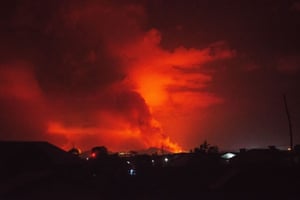
- The flames could be seen in Goma, about 8 miles from the site of the eruption in Virunga national park. Goma is home to about 700,000 people with many tens of thousands more living in the countryside around the city
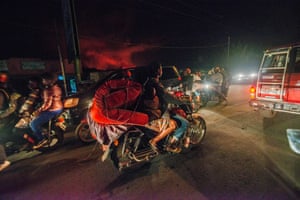
- People in Goma grabbed what they could and left, fearing the lava would reach the city. About 3,000 people fled into neighbouring Rwanda. Many are still displaced and there are food shortages across the region
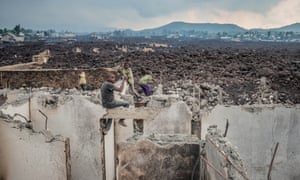
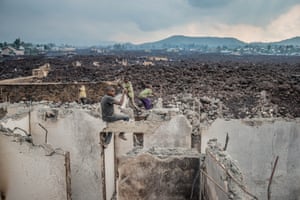
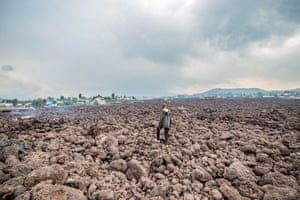
- The river of boiling lava finally came to a halt near the airport on the outskirts of Goma, stopping short of the main centre of population. The airport remains closed. Amid the smouldering lava the day after the eruption, residents surveyed the damage, some tentatively heading back to their homes, unaware of the risk of further earth tremors and eruptions
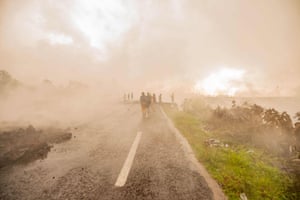
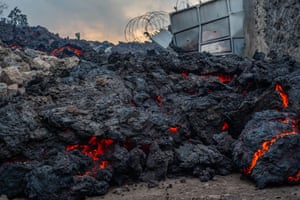
- At least 20,000 people have lost their homes and farms, roads have been destroyed, and food and water are scarce
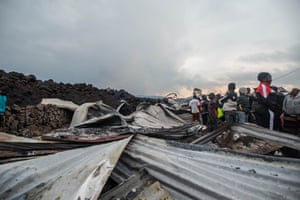
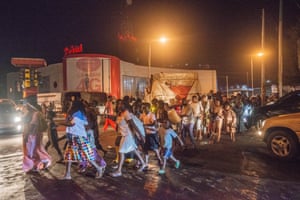
- The lava spared the main city in eastern DRC from disaster. The night-time eruption sent thousands fleeing in panic and confusion. Fire and strong fumes came from the blackish molten rock as it swallowed houses and settlements on its route towards Goma airport on the shores of Lake Kivu
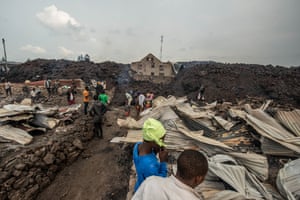
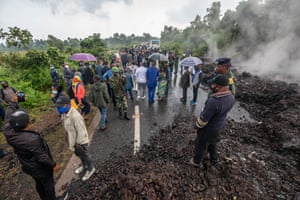
- The smouldering lava blocked roads and hampered emergency supplies
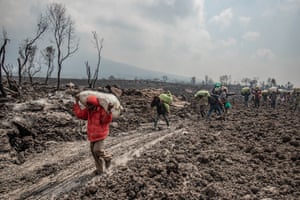
- Reaching some of the more than 400,000 people forced to evacuate is difficult in a volatile region beset by conflict and bandit attacks
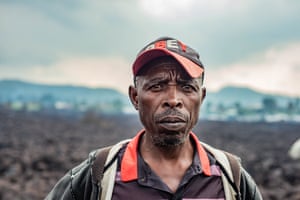
- Samuel Musakula, from Buhene, lost everything. ‘The night the eruption happened, like everyone, I fled my home, but when I returned the day after I found my house completely destroyed, and like all my neighbours, we are homeless now,’ says the 46-year-old, whose aunt was killed
- ‘This is the third eruption I am going through,’ says Musakula. He was only two when the volcano erupted in 1977, ‘but with my parents recalling the story so often, I have a clear memory of the facts’. In 2002, the last time the volcano erupted, Musakula lost his home. About 120,000 people were made homeless that time, and 250 people died
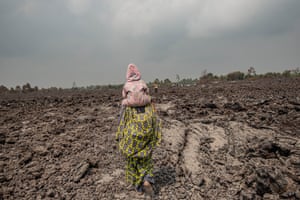
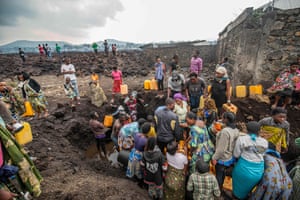
- People gather at a water point in a lava-covered field in Goma on Tuesday 25 May, three days after the eruption. About 500,000 people are believed to be without power and clean water
- Gentille (who only gave her first name), 25, fled her village in the north of the city with her three children when the volcano erupted. She says her home has been ‘completely destroyed by the lava of this monster’. They had no official warning of the impending eruption. ‘Instinctively, as soon as I started to smell the odour of carbon dioxide, far more intense than on a usual day, feeling a new eruption was imminent, I decided to flee in the mountains near our village, before it started,’ she says

- The confusion as people ran through the darkness was terrifying. ‘During my escape, I lost one of my children, and I couldn’t go back as the sky was [burning] red and lava had started to flow down the volcano. Luckily, I found him in the arms of my grandma when we arrived in the mountains,’ says Gentille
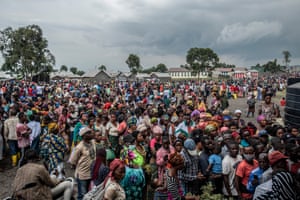
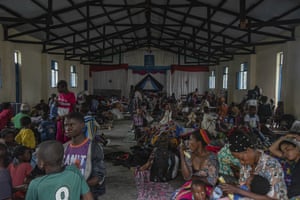
- Fearing another eruption, on Thursday 27 May the military governor of Congo’s North Kivu province, Lt Gen Constant Ndima Kongba, ordered the evacuation of 10 of Goma’s 18 neighbourhoods. The centre of Goma, which had been spared damage, is now under threat, he said, due to seismic activity near the city centre and Lake Kivu
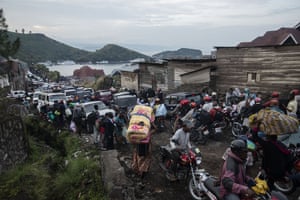
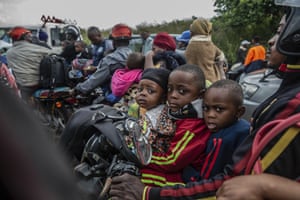
- An estimated 400,000 people fled the city on Thursday. The government has asked for help with shelter, food, water and healthcare. ‘There’s fear everywhere. Families are scrambling to get out of Goma any way they can,’ says Barbara Bitton, strategic response manager for DRC at NGO Mercy Corps, which is gearing up for ‘a major emergency response’
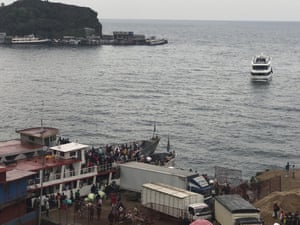
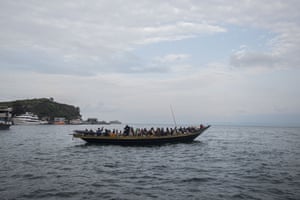
- Residents leave Goma by boat on Lake Kivu. Bitton said the city had experienced more than 300 aftershocks, some up to 5.2 on the Richter scale


No comments:
Post a Comment