Showing posts with label SFMTA. Show all posts

Monday, 10 February 2020

Service Changes Coming February 22

Service Changes Coming February 22
By Enrique Aguilar

Starting February 22, 2020, the San Francisco Municipal Transportation Agency (SFMTA) is making service changes to improve Muni service. These changes will improve reliability and connections, reduce crowding and provide one-seat rides for weekend early morning Metro service with bus substitutions. Affected routes include the J, KT, L, M and N Metro lines, 7 Haight-Noriega, 23 Monterey, 1AX, 1BX, 31AX, 31BX, 38AX, and 38BX.

To reduce the need for transfers during early weekend morning service, all metro lines will be served by bus after the end of OWL service and before Metro stations open. Metro stations open at 6 a.m. on Saturday and 8 a.m. on Sundays. The new early morning metro bus will be a one-seat ride to your destination.

To reduce overcrowding and increase transit reliability on weekdays, the 7 Haight/Noriega will begin running 60-foot buses.  Adding bigger buses to weekday service will provide Muni customers more seats and comfort during morning and evening commutes.

Due to construction at SFPUC’s Southeast Treatment Plant, the 23 Monterey will be rerouted from Jerrold to Palou between Toland and Phelps. New bus stops will align with the 24 Divisadero.

The last runs of the day for Muni’s evening Richmond Express service will change, which includes the 1AX, 1BX, 31AX, 31BX, 38AX, and 38BX. Customers are advised to check schedules and note alternate routes. For customers traveling outbound at 7:00 p.m., alternate routes include the 1 California on Davis and Sacramento streets or the 38 Rapid at Fremont and Market streets.

Please pay attention to Muni Alert signs for instructions or look for Muni ambassadors near affected bus route stops to answer your questions. Check if your route is affected at SFMTA.com/ServiceChanges.


Published February 11, 2020 at 04:30AM
https://ift.tt/2w75Rxi

Thursday, 23 January 2020

Update: Car-Free Market Street and FAQ

Update: Car-Free Market Street and FAQ
By Phillip Pierce

As you may have already heard (or read in our previous blog post), starting on Wednesday, January 29 some of the busiest sections of Market Street are going “Car Free” to increase safety and improve Muni. That means no private vehicles will be allowed to travel along Market Street eastbound from 10th to Main or westbound from Steuart to Van Ness. Traffic will still be able to cross Market, but there will be no turns onto the street in the car-free area.  

Our crews are hard at work getting the street prepared and have already installed signs that will be unveiled on January 29th. In addition, we’ve created new pedestrian safety zones, added new loading zones and are extending the Muni lanes down Market Street. 
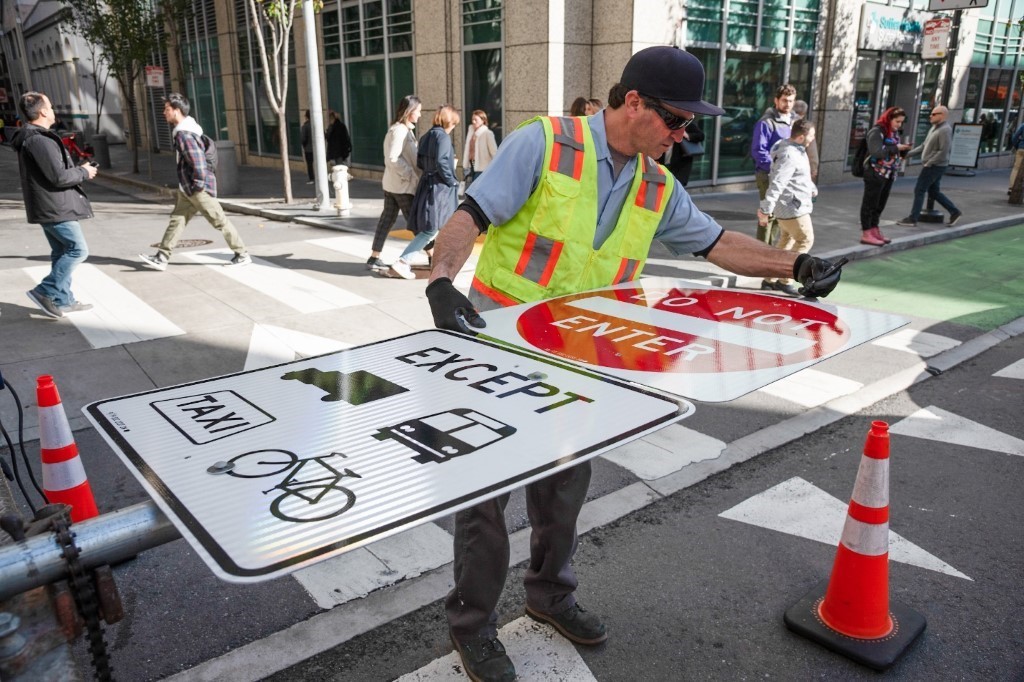
Crews installed signs along side streets in preparation for the changes on January 29. Most signs were put up and will be covered up (or “bagged”) until next week when the car free Market begins.
Crews installed signs alongside streets in preparation for the changes on January 29. Most signs were put up and will be covered up (or “bagged”) until next week when the car-free Market begins. 
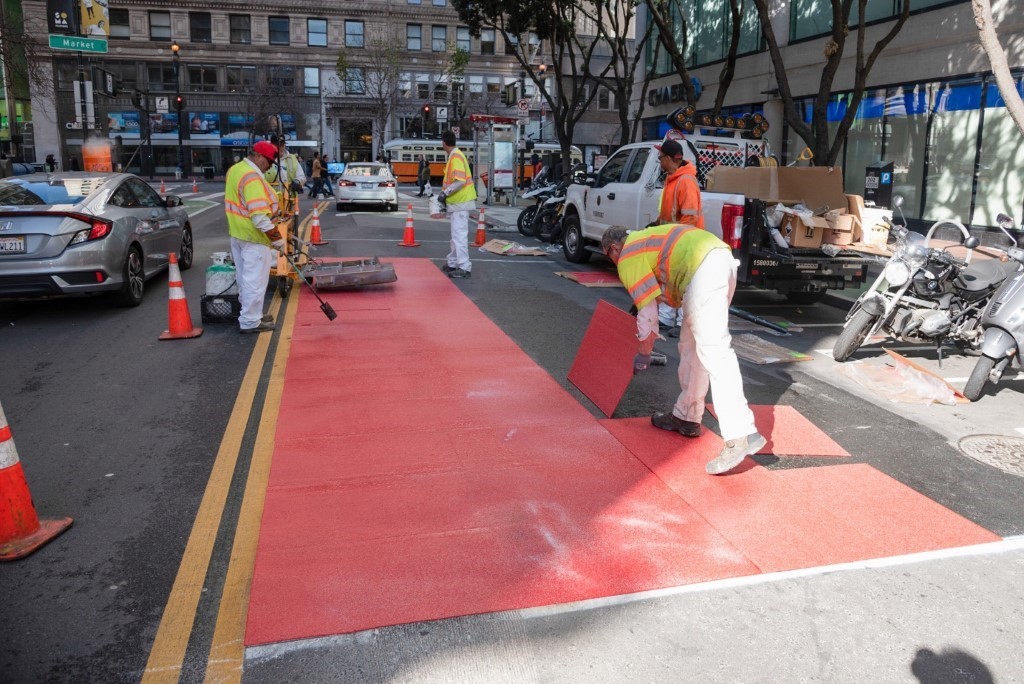
Red Muni lanes getting installed along 2nd Street near Market.
Red Muni lanes getting installed along 2nd Street near Market. As a part of the quick-build, Muni lanes are being extended east from 3rd to Main and on the last half-block of 2nd Street to improve transit in busy areas. 
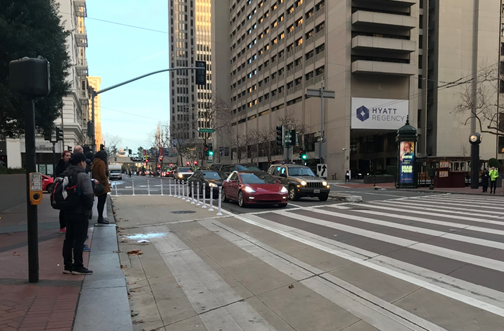
A new khaki-colored “painted safety zone” recently added at Drumm and Market will reduce conflicts and shrink street crossing distances for people walking.
A new khaki-colored “painted safety zone” recently added at Drumm and Market will reduce conflicts and shrink street crossing distances for people walking. 

A new khaki-colored “painted safety zone” recently added at Drumm and Market will reduce conflicts and shrink street crossing distances for people walking.
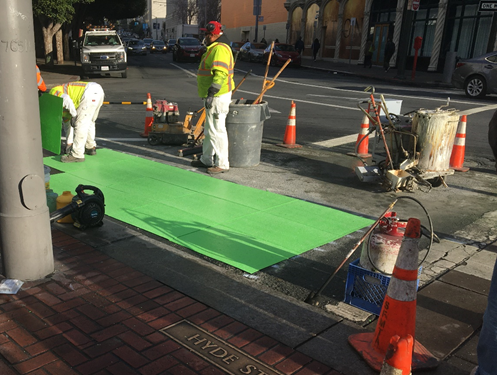
A new bicycle turn lane and bike box getting installed at Hyde/8th Street.  In case you want to get into all the details, we compiled a set of some of our most frequently asked questions below. 

Frequently Asked Questions 

1. What is Better Market Street?  

Better Market Street is the City’s multi-agency project to transform 2.2 miles of Market Street – from Octavia Boulevard to Steuart Street – enhancing safety and accessibility, improving transit performance, replacing aging infrastructure, and revitalizing the corridor’s streetscape. The goal of the project is to revitalize Market Street and reestablish the street as the premier cultural, civic and economic center of San Francisco and the Bay Area while bringing the transit system up to date.   

There were 123 injury collisions on Market Street between Octavia and Steuart in the year 2018. Since 2014, there have been an average of more than 100 per year with 75 percent involving people walking or biking. You can find more info about the full Better Market Street project here.

2. What does “quick-build” mean? 

quick-build project consists of parking and traffic modifications that are fast and relatively cheap to implement. Examples include painted safety zones, bike lanes, adjustments to parking regulations, parking and loading changes, changes to the configuration of traffic lanes. Crews typically use materials such as paint, traffic signs, traffic delineators, and traffic signal changes. Quick-build projects do not involve large capital construction elements since those involve much longer design, higher cost contracting, and construction phases.  

3. How many people use Market Street today? 

Market is our city’s busiest street for people walking, biking and riding transit. Currently, about 200 to 400 cars drive in the peak direction on Market Street during rush hour. These changes will require those cars to find an alternative route while benefitting all the people walking, biking and using transit: 

  • 500,000 people walk on Market Street daily.

  • 200 buses an hour during peak times.

  • 650 people per hour ride bikes on Market Street during rush hour.

  • 75,000 daily transit riders above ground.

4. What is going to change with the quick-build project and when?  

Better Market’s Vision Zero quick-build phase will start in January 2020 and includes: 

Beginning Wednesday, January 29th: 

  • Making Market Street car-free eastbound from 10th to Main, and westbound from Steuart to Van Ness. Vehicles will still be allowed to cross Market street at intersections. 

  • Similar car-free restrictions on Second Street (between Stevenson and Market) and Steuart Street (northbound between Mission and Market; southbound travel unchanged) to facilitate making Market Street car-free.

  • Peak hour loading restrictions on Market Street to reduce conflicts between people on bicycles, transit and commercial vehicles 

  • No southside loading in the eastbound direction (towards the Ferry Building) on weekdays between 6:00 a.m. to 9:30 a.m. 

  • No northside loading in the westbound direction (towards Twin Peaks) on weekdays between 3:00 pm and 7:30 pm.  

  • Prohibiting right runs onto Valencia from eastbound Market Street (Friday 1/31/2020) 

Completed: 

  • Over 100 new cross-street passenger and commercial loading zones to accommodate safe loading.

Ongoing through Spring 2020: 

  • Extending existing transit-only lane east from Third to Main Street, the segment of Market with the most transit service, and making it Muni-only (taxis and non-Muni buses will no longer be allowed).

  • Converting the existing red bus/taxi-only lane to Muni-only between 9th and 3rd streets.

  • Installing painted safety zones at eight intersections to make crossing the street safer and shorter.

  • Adding bicycle intersection improvements at Eighth, Page, Battery, and Valencia streets.

Beginning Summer 2020 and later: 

  • Changes to sections of Ellis and Jones streets near Market Street to improve safety and vehicle movement.

5. Where is the car-free area? 

Private vehicles will be prohibited on Market Street eastbound from 10th to Main and westbound from Steuart to Van Ness. The car-free area is shown in the red areas below along with other changes shown by blue arrows. 
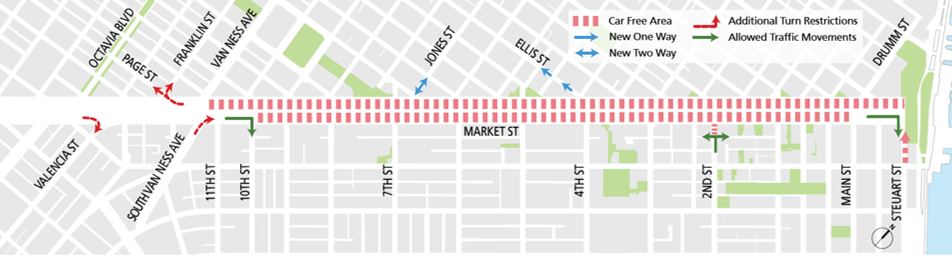
Map of Car Free Market traffic flow

6. Will I still be able to use Market Street to access Franklin and Gough?  

Yes. The Quick-Build phase-only restricts traffic east of 10th or Van Ness. The future capital project would extend the turn restrictions west to 12th Street, but will not affect access to Franklin or Gough.  

7. Will there be enforcement?  

San Francisco Police and SFMTA Parking Control Officers will be helping to call attention to the new restrictions and directing traffic.  Vehicles violating the restrictions could be cited for violating CVC 22101d (violating an official traffic control device) which carries a $238 fine and adds one point to a DMV record.  

8. What sort of outreach are you doing?  

Our teams have discussed various proposals with the community for years during the design phases for Better Market Street. We hosted 5 rounds of large public meetings, presented to dozens of groups and studied the corridor extensively. Outreach specific to the quick-build, car-free area included: social media, signs in parking garages, electronic signs on/above downtown streets, stakeholder meetings, multi-lingual flyers, door-to-door discussions, media stories, and messages on electronic NextBus signs in all Muni shelters. We also worked with all the app-based mapping companies to ensure they deliver accurate routes that avoid Market Street in the car-free area. 

9. How will Quick-Build improve accessibility? 

The private vehicle restrictions on Market Street and newly painted safety zones at select intersections will reduce pedestrian conflicts with vehicles.  We also have provided additional loading zones on cross streets – over 100 new loading zones, including 23 new white zones and 8 new blue zones. The vast majority of the loading zones on cross streets are for general commercial loading (unlike the ones on Market, which are restricted to six-wheel vehicle restrictions) and can be used for up to three minutes for passenger loading.  Maps of all the new and existing zones can be found here: SFMTA.com/BetterMarketStreet 

10. How much will it cost?  

The quick-build phase is estimated to cost approximately $3.5 million and is funded through local general funds.    

11. Which vehicles will be allowed after private vehicles are restricted? 

Transit, paratransit, taxis, commercial delivery vehicles and emergency vehicles (Transportation Network Companies such as Uber and Lyft are not permitted). All vehicles would continue to be allowed to access Franklin and Gough streets.  

12. Are there any exceptions for vehicles with disability placards? 

Vehicles with disability placards are not exempt from these restrictions unless they have commercial plates. It should be noted that there are not currently any blue zones or other legal parking available for vehicles with disability placards on Market Street, so Better Market Street does not add any new parking restrictions for people with disabilities.  

13. Will deliveries still be allowed on Market Street? 

Yes, as long as the delivery vehicles have commercial license plates. As is the case today, most of the loading zones on Market Street require vehicles to have at least six wheels (big trucks and buses). In addition, there will be new restrictions on deliveries during the peak-hours in the peak-direction to improve safety:  

  • Southside loading in the eastbound direction (towards the Ferry Building) would not be allowed on weekdays from 6:00 a.m. to 9:30 a.m. 

  • Northside loading in the westbound direction (towards Twin Peaks) would not be allowed between 3:00 p.m. and 7:30 p.m.  

14. How are you coordinating with Uber and Lyft and other Transportation Network Companies (TNCs)?   

TNCs are typically not commercial vehicles, and as such, they will not be allowed to drive on Market Street.  However, we have coordinated with Uber and Lyft to have the white zones added to their apps, so that passengers wishing to have a pick-up on Market Street will be redirected to the closest cross-street white zone for their pick-up.  

15. With cars no longer allowed to travel on Market Street, will traffic get worse on Mission Street and other parallel streets?   

We did extensive traffic modeling to understand the impacts of removing cars from Market Street. Currently, about 200 to 400 cars drive on Market Street during peak hours, depending on the block and direction.  Because streets north of Market and those in SoMa have grid layouts, people driving have extensive choices about which street to take, and will not all be diverted to the same street.  We anticipate about 100 cars per hour will be shifted to Mission Street, which will not significantly impact general traffic or transit on Mission Street. In addition, the turn restrictions will reduce congestion at intersections, as cars turning onto Market currently block traffic on cross streets as they wait for a gap in pedestrians crossing to complete their turn.  The turn restrictions will aim to improve traffic flow as well as pedestrian safety.  

16. When was the project approved?  

The Better Market Street project’s Environmental Impact Report was certified by the Planning Commission on October 10, 2019. The Public Works Hearing was held on October 11. The SFMTA Board approved the project on October 15, 2019.  

 17. Quick-Build is exciting, but when will the bigger construction project start?  

The capital project will be built in phases, with each of the five phases estimated to be $150-200M. Much of the costs are state of good repair work, including rail and trackway replacement, the overhead wire system, traffic signals, repaving, streetlights, sewer, and water.  Funding for Phase 1 has been secured through several existing local sources, including the voter-approved Prop A General Obligation Bond and Proposition K (formerly OBAG), as well as some federal funding through a BUILD transportation grant. The Better Market capital construction project is currently in design, with the first phase between 5th and 8th Streets anticipated to start construction in late 2020 or early 2021. We have more information on the full capital project construction and design available.


Published January 24, 2020 at 02:40AM
https://ift.tt/30OqbP4

Friday, 17 January 2020

SF Restaurant Week: January 22nd-31st

SF Restaurant Week: January 22nd-31st
By Jeanne Brophy

It’s once again time for San Francisco Restaurant Week, where some of the best neighborhood restaurants thoughtfully create prix-fixe menus that highlight some of their signature tastes or take the opportunity to feature a new dish. It’s a great week of restaurants strutting their creativity to give you, the diner, a peek at the food to tempt you to return.

This year SF Restaurant Week will feature two-course lunch and three or more course dinner menus at different prices determined by the restaurant:

Lunch (2+ course):  $15.15 & $25.25

Dinner (3+ course): $40.40 & $65.65 menus

Visit the SF Restaurant Week listings to choose by neighborhood or cuisine preference—menus are also included.

You may want to get yourself out via the 5 Fulton to experience the neighborhood gem Cassava where they are known for an exceptional Japanese breakfast of miso soup, market fish, pickles and the most sublime soft shell-poached egg in broth you may ever experience—right there in the Balboa District.   

Grab a colleague and hope on one of the vintage street cars (Line F) for an extended lunch at Starbelly over in the Castro for that fried chicken po’boy with jalapeno and radicchio slaw.

Dinner options are wide-ranging: you can’t go wrong at Blue Plate on Mission Street, easily accessible by the 14, J Church and 49. Offerings include the indulgent black truffle gnocchi, blue plate meatloaf or egg tagliorni with lemon. An exceptional value can be found at China Live, a 30,000 square foot culinary and cultural destination in the heart of Chinatown.   

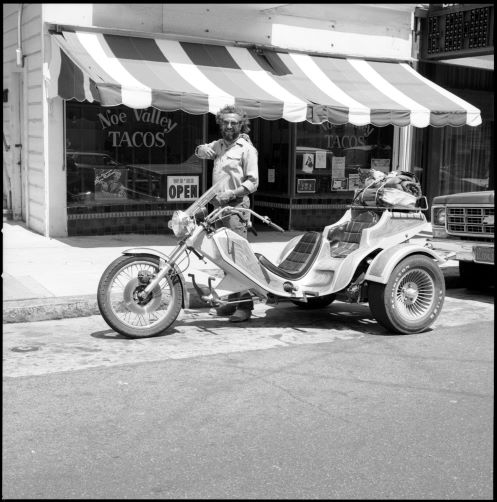
Vintage black and white photograph of a person standing over his motorcycle in front of a restaurant called "Noe Valley Tacos"

Whatever way you get there SF Restaurant Week offers Mexican, Indian, Italian, Caribbean and all sorts of tasty delights for lunch or dinner. Check out a new neighborhood and support a small business between January 22-31. 

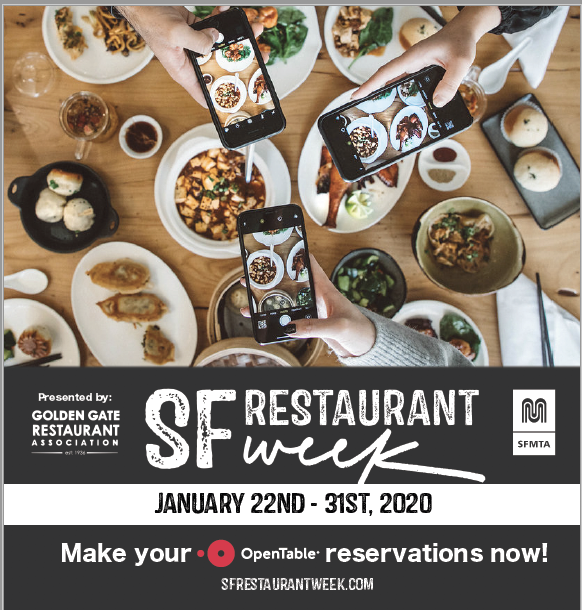
Add for SF Restaurant Week January 22-31. Image a table full of food with phones hovering above ready to take pictures.

SF Restaurant Week, January 22-31, features two-course lunch and three or more course dinner menus.


Published January 18, 2020 at 02:31AM
https://ift.tt/30wxhaO

Adaptive Scooters for People with Disabilities

Adaptive Scooters for People with Disabilities
By

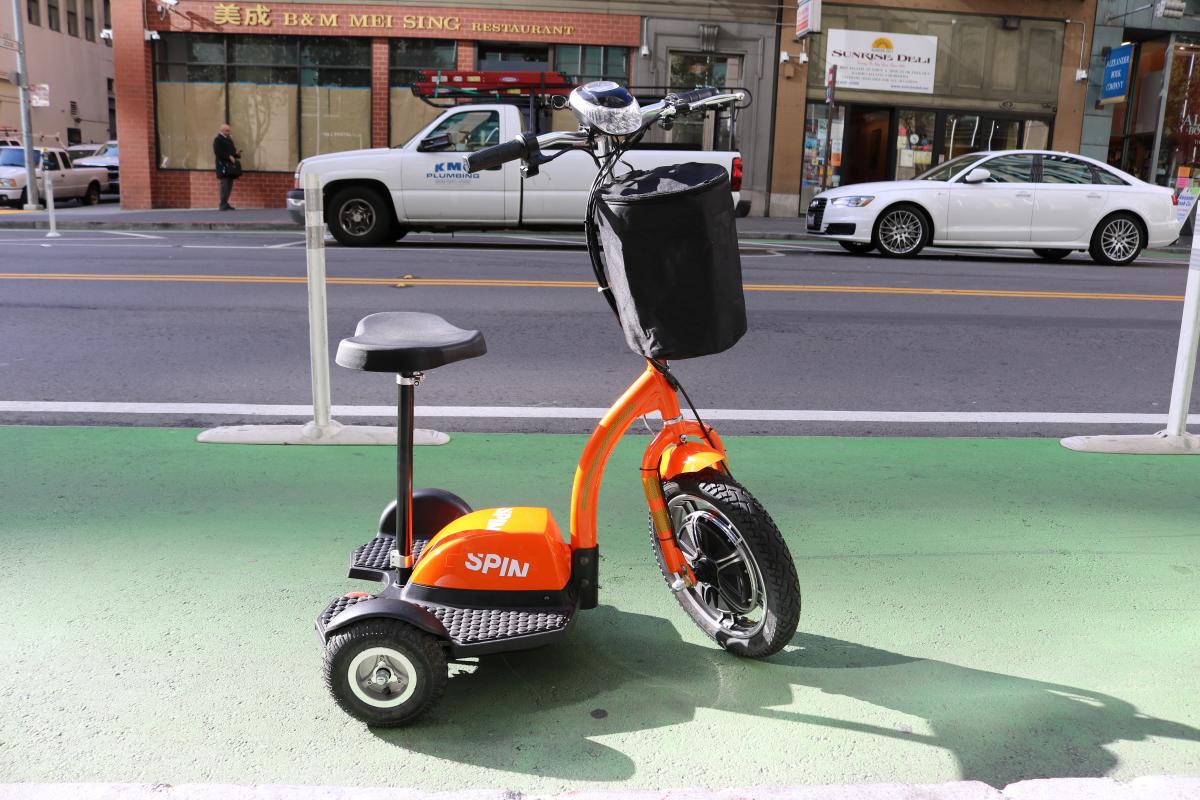
Spin adaptive scooter

We are committed to a transportation system that serves everyone. However, the recent and rapid introduction of new transportation services has not always included all San Francisco residents and visitors, especially people with disabilities. As an agency, we are actively shaping our approach to emerging mobility services and technologies to ensure that they are accessible to all. That is why we were a proud partner in last summer’s adaptive bike-share pilot and, when we established a permanent permit program for Powered Scooter Share, we required that all permittees develop an adaptive scooter pilot program to make shared micromobility more accessible to people with disabilities. Starting January 15, 2020, four unique adaptive scooter pilot programs, with a total of 50 adaptive scooters, are now available to the public through our permitted scooter operators, Jump, Lime, Scoot, and Spin.

A program of this kind is very new and we do not have many peer programs to look toward for guidance. Because of this, the SFMTA did not require applicants to deploy a specific vehicle type or service model. Rather, permittees were instructed to develop vehicles and corresponding services that are based on input from people with disabilities. Below we have prepared a summary of each permittee’s respective pilot program. As these programs may change over time, we encourage you to visit each company’s website for current updates.

From the pilots, we hope to better understand the device types, fleet sizes, and program models that will best fit the needs of a diverse group of riders with disabilities who have not had access to the standard shared scooter program.  Permittees are expected to actively solicit input and feedback on their pilots and iterate on their initial vehicle and program designs in order to best meet community needs. Our learnings throughout the pilot will help to inform any permanent program or requirements moving forward.

In addition to providing equal access to all services, we are always committed to ensuring that scooters and other shared micromobility vehicles do not endanger pedestrians or otherwise hamper accessibility of the streets and sidewalks. We are closely monitoring operator performance so that we can enforce and, when needed, void operator contracts. Our enforcement team is out in the field tracking scooter activity and responding to complaints. Investigators cite shared scooters that do not comply with our parking guidelines and notify scooter companies of sidewalk riding. Permittees must investigate and resolve all sidewalk riding reports. We are also working with 311 to improve processes and make it easier for the public to make complaints about both improper parking and riding.

We want to hear from you and look forward to hosting formal opportunities for feedback during the mid-point of the pilot. In the meantime, you may submit a comment through our Regulated and Emerging Mobility Comment Form or through 311. And, if you are a resident or regular visitor to San Francisco and have a disability, we encourage you to complete this survey on your experiences, perceptions, and priorities around emerging mobility services. Respondents are eligible to win a $50 Safeway gift card from the survey administrator, UCLA.


Jump

Lime

Scoot

Spin

Device Type 3-wheeled scooter 2-wheeled scooter with seat 2-wheeled scooter with seat

3-Wheeled Device with
Seat, Standing platform & Handlebar

Number of Devices

2 RASSINÉ Tristar Scooters at launch (plan to scale to 10 total vehicles)

22 at the start with plans to increase to 33 10

10 - 15

Reservation Process

Please call or email to make a reservation 24 hours in advance. Phone Number: (415) 326-4880
- Email
- Online

Reserve in-app, at least 24 hours in advance. The scooter will be delivered and picked up to/from the rider.

This pilot is not yet open to the public. Please contact Bob at bob@scoot.co for more information.

Set up an account and make reservations:
- Online
- In-app (through FAQ section)
- By phone: (888) 262-5189 

Service Area/Pick-Up Drop Off Locations

Pick-up/Drop-Off at: 140 Bluxome Street, San Francisco, CA 94107

The whole city (except hilly park areas: Lincoln Park, GG Park, Panhandle, Lake Merced Park, and Twin Peaks Area) Same as the standard device service area. Rent from 1144 Howard St Return to 3 locations: 588 Brannan St, 530 Broadway St., 1537 Mission St. Devices limited to 10-degree slopes or lower
Service Hours Monday - Friday 8:30 a.m. - 5 p.m. Reservations 7 days/week, 8 a.m.- 6 p.m., excluding holidays. Once reserved, access for 24hr Same as standard device availability. All Weekdays 9:00 a.m. - 5:30 p.m., except in inclement weather
Cost Free for limited time $32/day (Lime Access users get 50% discount) Free Free, may change over course of the pilot.
Payment Method Free for limited time Credit card (and text-to unlock feature) or cash via Pay Near Me for Lime Access Users Free N/A


Published January 18, 2020 at 02:43AM
https://ift.tt/374AIbv

Friday, 10 January 2020

The Time for Justice

The Time for Justice
By Lori Phelan

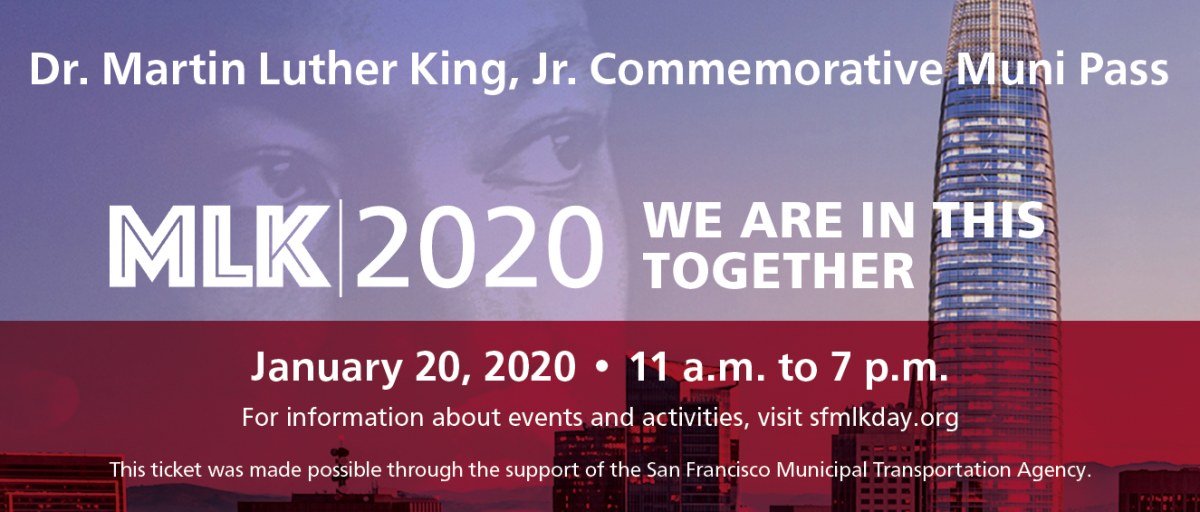
Martin Luther King commemorative Muni pass

During the week of Jan. 13 to 20, residents of the Bay Area will come together to honor the legacy of Nobel Peace Prize recipient Dr. Martin Luther King Jr. with a week of community and service. The weeklong celebration will culminate with a march and faith lectures Monday, Jan. 20. For a complete listing of free activities and programs taking place at venues throughout San Francisco, please visit MLK2020 Schedule.

This year’s 1.5-mile march begins at 11 a.m. and crosses the Lefty O'Doul Bridge, stopping at the Willie Mays Plaza at Oracle Arena to commemorate the crossing of the Edmund Pettus Bridge in Selma – a symbol of the civil rights movement. SFMTA participants are encouraged to walk together as a team and arrive early at the Caltrain Station, 700 4th Street.

At the conclusion of the march, the San Francisco Interfaith Council will bring together the region’s faith leaders to commemorate Dr. King and to lead a spiritual reflection of his message.

Other celebratory events include MLK King and Faith Lectures, Black & Brown Comix Arts Festival, and the Health & Wellness Festival. For the complete listing of event times and locations, visit the NorcalMLK Foundation website.

The Time for Justice

On March 18, 1956, the day before he was to stand trial over breaking the state of Alabama's anti-boycott law over the Montgomery Bus Boycott, a then 27-year-old Baptist minister Martin Luther King, Jr. spoke about an 'obnoxious' peace during a sermon – the basis for this year’s theme, The Time for Justice. More information about that historical event can be found at Norcal MLK2020.

Getting there

Each year SFMTA plays the vital role in connecting the public to San Francisco’s MLK events, signaling a strong commitment to the principles and legacy of Dr. King. On Monday, Jan. 20, the SFMTA will be partnering with the Northern California Dr. Martin Luther King, Jr. Community Foundation to provide free commemorative MLK passes, complimentary shuttle service to events and support staff for the march/parade.

You can register for the MUNI passes for the march and interfaith commemoration address at the Yerba Buena Gardens Esplanade Stage through MLK2020 Muni Commemorative Passes. Reserve your complimentary tickets now and pick them up at San Francisco's Mayor's Office of Neighborhood Services at City Hall by Friday, Jan. 17. Cable Car service is not included.

For those residing on the peninsula, consider catching the Caltrain NorcalMLK Celebration Train into the city in honor of the legacy begun by the late Coretta Scott King.

Live in North Bay? Take the MLK2020 Golden Gate Freedom Ferry courtesy of the Golden Gate Transit system who has provided the commemorative service since 2004.

And check BART for special service that day as well.


Published January 11, 2020 at 03:29AM
https://ift.tt/2TbZRNd

Wednesday, 8 January 2020

Kick-Off Muni Art 2020

Kick-Off Muni Art 2020
By

On Thursday, January 9, at City Hall, the San Francisco Municipal Transportation Agency (SFMTA) and San Francisco Beautiful (SFB), will announce the kick-off of the 2020 Muni Art Project.

Now in its fifth year, Muni Art is the only public art project that exclusively features San Francisco artists and poets. The program brings together the artists’ original work along with five poems under a theme.  The poems were selected by the Poetry Society of America and will be presented on 100 Muni buses throughout San Francisco from January through April 2020. Over 750,000 Muni riders will experience Muni Art 2020.

“Muni is the one place in the City where everyone comes together, so our buses are also the best possible art gallery,” said SFMTA Director of Transportation, Jeffrey Tumlin. “Art elevates people and changes their perspective. Transit connects people. Art and transit are perfect partners.”

The 2020 theme, “Hidden Gems of San Francisco” is a collaboration with The Poetry Society of America (sponsors of Poetry in Motion ®).  The non-profit organization was involved in the selection of the five poems from local poets which in turn were creatively interpreted by each Muni artist resulting in key artwork pieces from each artist for public display.

The 2020 Muni artists are:

Colorful geometric shapes
Wendy Ackrell

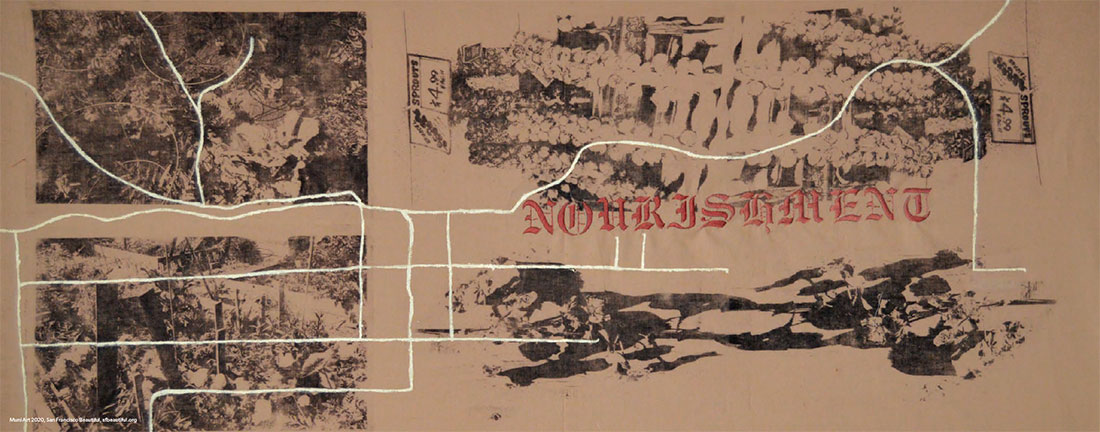
Stylized images of San Francisco with the word "Nourishment" overlaid
Shannon Bodrogi

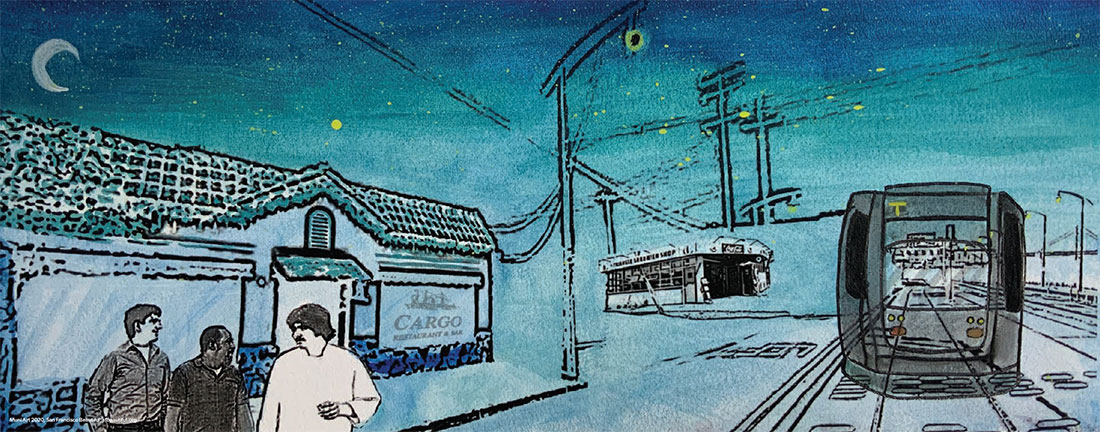
Watercolor of T Third Muni Metro Light Rail Vehicle approaching under a cresent moon
Vanessa Fajardo

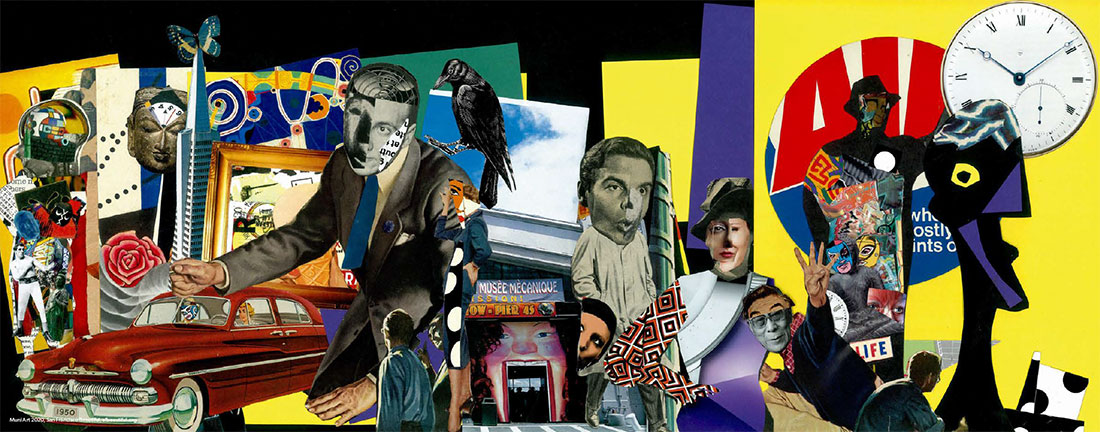
Collage of various San Francisco themes including the Transamerica Pyramid
Skooter Fein

Image of Jocelyn Li Langrand's illustration of bikers, people plus a giraffe, riding up a hill with "San Francisco" written upon it
Jocelyn Li Langrand


The five 2020 Muni poets and poems are:

Iris Jamahl Dunkle “Listening to the Caryatids on the Palace of Fine Arts”

Randall Mann “The Long View”

Melissa Stein “Baker Beach”

Tess Taylor “Train Through Colma”

Mathew Zapruder “The Antidote to Fascism is Poetry”


In addition to the poet panels, each artist also has three panels to freely use for reflecting the program theme for a total of eight original works that will line both interiors and sides of the buses.

This year, the Muni Art Project is funded by members of San Francisco Beautiful, AT&T and UpCal Entertainment.

For more details on the winners of the Muni Art Project, please visit the San Francisco Beautiful webpage. Examples of each artists’ work can be found at SFMTA Muni Art and from the links above to each artist page.


Published January 09, 2020 at 02:50AM
https://ift.tt/39UCJZp

WHAT IS BREAKOUT → RE-TEST?

Breakout: When the price breaks a support or resistance level that it has tested before and moves above or below that level. Re-...