Sudan's Omar al-Bashir sentenced to two years for corruption
Sudan court convicts former president of money laundering, sentencing him to two years in a rehabilitation facility.
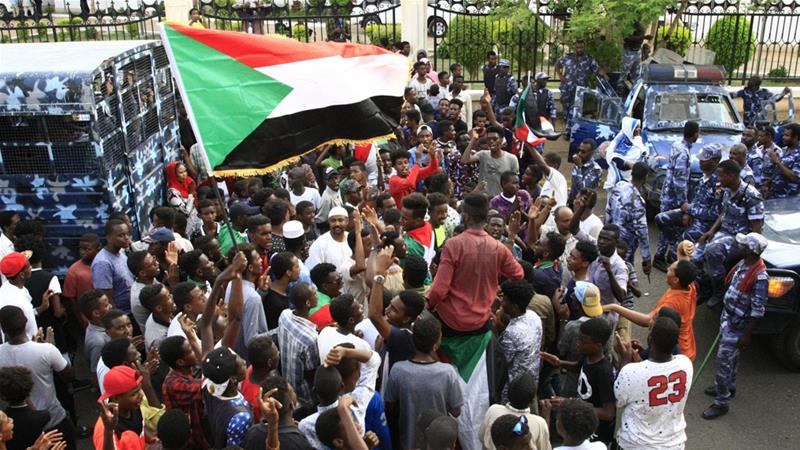
Omar al-Bashir was overthrown in April after months of demonstration [File: Mohamed Nureldin Abdallah/Reuters]
Sudan's former President Omar al-Bashir has been sentenced to two years in prison on financial irregularity charges in the first of several cases against the leader was removed after nearly 30 years in power.
Al-Bashir, who was overthrown in April after months of nationwide demonstrations, appeared in court in the capital Khartoum on Saturday, facing charges of corruption and illegal possession of foreign currency.
Saturday's case against him centred around suitcases filled with multiple currencies worth more than $130m which were found in his home.
While the former president admitted he had received $25m from Saudi Arabia's Crown Prince Mohammed bin Salman (MBS), he pleaded not guilty to the charges.
Advertisement
Al Jazeera's Hiba Morgan, reporting from Khartoum, said: "But these are not the only charges."
"Just a few days ago he was investigated and interrogated for his role in the 1989 coup that brought him to power and ousted a democratically elected government."
The 75-year-old, who was in power for 30 years, was deposed when members of the military arrested him after months of nationwide anti-government protests.
He is currently being held in Kobar prison - where he once sent many of his political opponents and which is a far cry from his luxurious palace.
According to his lawyers, al-Bashir was this week summoned to answer questions about the coup that brought him to power in 1989 and the killing of protesters earlier this year.
He is also wanted by the International Criminal Court (ICC) in The Hague for crimes against humanity, war crimes and genocide in Sudan's Darfur region. It is still unclear whether or not he will be handed over.
Despite the international warrant for his arrest since 2009, al-Bashir managed to travel to several countries in recent years, including Arab and African nations.
The northeast African country of Sudan is currently ruled by a transitional civilian government and is one of the world's 25 poorest countries.
Pakistan tycoon hands over $248m to settle UK corruption probe
By AlJazeera and News Agencies
UK's National Crime Agency says assets and cash frozen in the country will be handed over to Pakistani government.
The UK agency said the assets would be passed to the government of Pakistan, which has been spearheading an anti-corruption campaign [File: Caren Firouz/Reuters]
Malik Riaz Hussain, a Pakistani real estate tycoon, has agreed to hand over 190 million pounds (approximately $248m) held in the United Kingdom to settle a corruption investigation.
Hussain, one of Pakistan's richest and most powerful businessmen and one of the country's biggest private employers, built upmarket housing complexes. He is accused of fraud and corruption.
Britain's National Crime Agency (NCA) said it has agreed to a settlement in which Hussain would hand over his 1 Hyde Park Place property, valued at 50 million pounds (approximately $65m), and cash frozen in the British bank accounts.
The NCA had previously secured nine freezing orders covering 140 million pounds (approximately $182m) in the accounts on the grounds that the money may have been acquired illegally.
Advertisement
Anti-corruption drive
The agency said the assets would be passed to the government of Pakistan, which has been spearheading an anti-corruption campaign since Prime Minister Imran Khan came to power last year.
The NCA, however, said that the settlement with Hussain was "a civil matter, and does not represent a finding of guilt".
Hussain, who also supports charitable causes in the South Asian nation of 200 million, quoted this line in a tweet, which also included the NCA statement.
"Some habituals are twisting the NCA report 180 degrees to throw mud at me," he posted.
The settlement will help Khan's anti-corruption drive, which has so far failed to bring back the billions of dollars that his government accuses the opposition politicians of stashing abroad.
Pakistani journalist and commentator Zarrar Khuhro said it was a "monumental moment" for Pakistan government's anti-corruption drive.
"However, it was a little odd that the government has not, as yet, claimed credit for this or shouted it from the rooftops as one would expect them to do," he told Al Jazeera.
According to the Financial Times newspaper, UK Land Registry records show the Hyde Park property was purchased for £42.5m (approximately $55m) in 2016 from the son of former Pakistani Prime Minister Nawaz Sharif.
On @ZaraHatKay_Dawn tonight we discuss in detail settlement between NCA and Malik Riaz over UK properties one of which was earlier owned by Hussain Nawaz along with #UoBVideoScandal and inspirational stories of differently abled Pakistanis making it big @ZarrarKhuhro@Dawn_News
Pakistani media outlet ARY News said the property wassold in March 2016, weeks before a set of controversial documents implicating many global leaders and businessmen, known as the Panama Papers, became public.
Sharif was sentenced to 10 years in prison in 2018 on corruption charges linked to the Panama Papers revelations regarding his family's properties outside Pakistan.
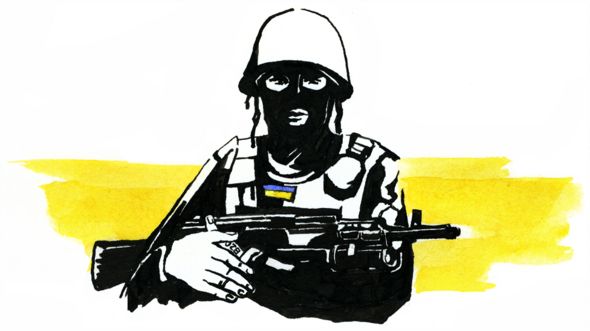
"I am HIV positive; I already had HIV when I joined a volunteer battalion to fight separatists in eastern Ukraine," says Ukrainian war veteran Vasyl. "I had no fear for my life. I had nothing to lose."
Vasyl is not his real name, but this is the story of a man with HIV who volunteered for the front line and was shocked by the level of ignorance that other soldiers had about his virus.
When he travelled east, Vasyl tore up his HIV status certificate. The only person he told was the commanding officer of his combat unit fighting Russian-backed rebels.
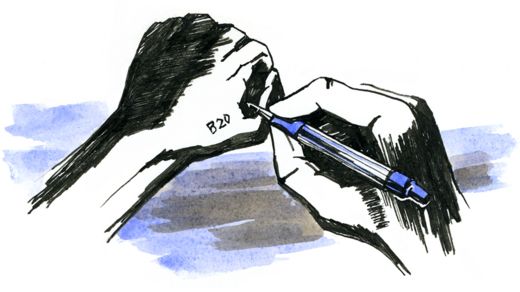
"My commander told me to write 'B20' on my left hand when I'd go into battle. If I were wounded or killed, medics would know what I had."
They would know what B20 meant, but his fellow soldiers did not.
While Vasyl kept his HIV positive status quiet, he was startled to find many of his comrades exchanging food or $10 in return for sex near the front line.
Was the front line becoming a hotspot for spreading HIV, hepatitis C and other infectious and sexually transmitted diseases (STDs), he wondered.
People with HIV face stigma in Ukraine. And yet it has the second-highest rate of HIV infection in Europe behind Russia and, despite regular public campaigns, there is still a degree of ignorance about how the virus is spread.
Vasyl knew his HIV could only be passed on through sexual intercourse or blood transfusion, but he was worried what would happen if his colleagues found out.
"Ninety per cent of my comrades didn't know what HIV/Aids meant. They were armed and could have killed me if I'd told them," says the ex-soldier.
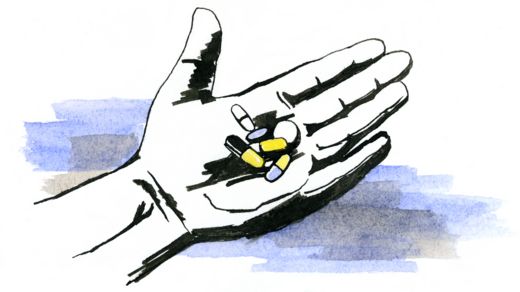
When he took his antiretroviral pills, his comrades assumed he was taking illegal stimulants.
Image copyrightBBC/OLESYA VOLKOVA
Ukraine's rate of HIV infection may have slowed down, but it still struggles to curb the spread of the virus.
"People at risk include mostly sex workers, drug addicts and men who have sex with other men. Servicemen and war veterans recently have joined them," says Krystyna Rivera from the charity 100% Life, which aims to stop the spread of the epidemic.
HIV in Ukraine
244,000 people* in Ukraine were living with HIV in 2018
There is no reliable information on the spread of STDs in eastern Ukraine, where the army has been fighting Russian-backed separatists in Ukraine's Donbas region since 2014. The war has claimed the lives of 13,000 people and wounded over 30,000.
But Vasyl says soldiers did not bother to practise safe sex, even with a prostitute. "Half the volunteer fighters felt like they were on a suicide mission, so they couldn't care."
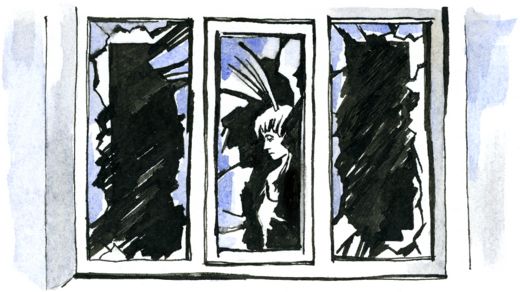
The local women had lost their homes and jobs and had seen their lives and those of their families torn apart. Sex for them was just a way to survive, he believes.
Image copyrightBBC/OLESYA VOLKOVA
When he was at the front, HIV tests were not included in the army's regular health screening for volunteer soldiers. Things have improved, but the defence ministry has not responded to the BBC's request for details.
The main obstacle is social stigma, as people are loath to find out whether they have HIV. Having the virus in a small town or village could lead to gossip, condemnation and being ostracised.
While two-thirds of cases are passed on through unprotected sex, the health ministry says one in five cases of infection come from injecting drugs.
The majority of people who know about their HIV are terrified of social isolation, says psychologist Hanna Kuzmenko, who has worked with HIV-positive patients for 20 years at a regional medical treatment centre in central Ukraine.
Image copyrightBBC/OLESYA VOLKOVA
"Two to three per cent of those with HIV never tell anyone. They live in constant fear and under pressure. I have some patients who've only confessed to me," she says.
The key for Ms Kuzmenko is for better and clearer information, in the big cities as much as villages.
For a decorated war veteran like Vasyl, it was combat that helped him deal with the frustration and anger in the years after diagnosis.
But he speaks of one life-changing moment during the conflict that shook him to the core.
"We were on duty patrol. I went to warm up and was chatting to my comrade who wanted to stay in the vehicle a few moments more to keep warm. Then a missile hit our car. My comrade was dead."
Image copyrightBBC/OLESYA VOLKOVA
When he woke up in a military hospital, he could not believe he had survived.
He has since taken fewer risks and now views life as more precious. "I wanted to live! My life made sense."
In this episode of UpFront, we ask Beijing-based commentator Victor Gao about the protests in Hong Kong and challenge him on China's mass detention of Uighur Muslims in Xinjiang.
And in our Arena, Omar Shakir and Eugene Kontorovich debate the US policy reversal on illegal Israeli settlements in the occupied West Bank.
Hong Kong protests: Are police using excessive force?
The US ramped up the pressure on Hong Kong this week over its handling of anti-government protests that have dragged on for months in the self-governing Chinese territory.
Congress passed two bills aimed at supporting protesters; they include measures that would allow for sanctions against officials responsible for human rights abuses in Hong Kong. The move infuriated China, which warned of "strong countermeasures" if US President Donald Trump signed off on the bill.
The protests, which began in June, have become progressively violent. The UN human rights office said it was concerned that some demonstrators were resorting to extreme violence, but it has also questioned the use of excessive police force.
Human Rights Watch and Amnesty International have also raised concerns over police handling of the crisis.
Victor Gao, vice president of the Center for China and Globalization, says Hong Kong protects the right of people to protest, but that there are criminals among the demonstrators.
"They [the police] have a job to do, they need to do whatever they can, allowed by the law, to bring law and order back to Hong Kong," Gao said.
"Hong Kong police compared with their counterparts in many other cities in the world are very well disciplined, very civilised, if I may use that word. And I don't think they use excessive force," he added.
When asked about China's actions in Xinjiang province, where it is believed up to three million Uighur Muslims have been imprisoned in so-called "reeducation camps" Gao said he supports the government's measures.
"I support all the legal measures adopted by the Chinese Government under Chinese law, in order to fight against terrorism," Gao said.
Rights groups say China is conducting a mass, systematic campaign of human rights violations against Xinjiang's Muslims.
This week's Headliner is China commentator and former interpreter to President Deng Xiaoping, Victor Gao.
US policy on Israeli settlements: What's the legal basis?
US Secretary of State Mike Pompeo announced this week that the US no longer considers settlements in the occupied West Bank illegal, reversing 40 years of American policy.
Pompeo said the decision was made after "carefully studying all sides of the legal debate".
According to several United Nations Security Council resolutions, the most recent in 2016, Israeli settlements are illegal under international law as they violate the Fourth Geneva Convention, which prohibits an occupying power from transferring its population to the area it occupies.
Omar Shakir, director of Human Rights Watch in Israel and Palestine, says the Trump administration cannot erase decades of established international law.
"There is consensus outside of this Israeli government, and outside of the Trump administration, that settlements are illegal. It is as uncontroversial to say settlements are illegal as it is to say that torture is illegal. It is black-and-white international law," Shakir said.
Eugene Kontorovich, an international law professor at George Mason University Scalia Law School and the Israeli think-tank Kohelet Policy Forum, says settlements are not illegal because you can only occupy the territory of another country.
"In 1967, when Israel retook the West Bank, it was not Jordanian territory. Jordan was not the sovereign. It was not - there was no Palestinian state, it's not occupation," Kontorovich said.
In this week's Arena, we discuss the US policy reversal on Israeli settlements in the occupied West Bank.

![Omar al-Bashir was overthrown in April after months of demonstration [File: Mohamed Nureldin Abdallah/Reuters]](https://www.aljazeera.com/mritems/imagecache/mbdxxlarge/mritems/Images/2019/9/7/552d25f3d73d42879ceb40eba7208e09_18.jpg "Sudan's Omar al-Bashir sentenced to two years for corruption")


![The UK agency said the assets would be passed to the government of Pakistan, which has been spearheading an anti-corruption campaign [File: Caren Firouz/Reuters]](https://www.aljazeera.com/mritems/imagecache/mbdxxlarge/mritems/Images/2019/12/4/a0e535bbaf69401a8e56f4072f6fdb01_18.jpg "Pakistan tycoon hands over $248m to settle UK corruption probe")