
Trading Turtle Soup


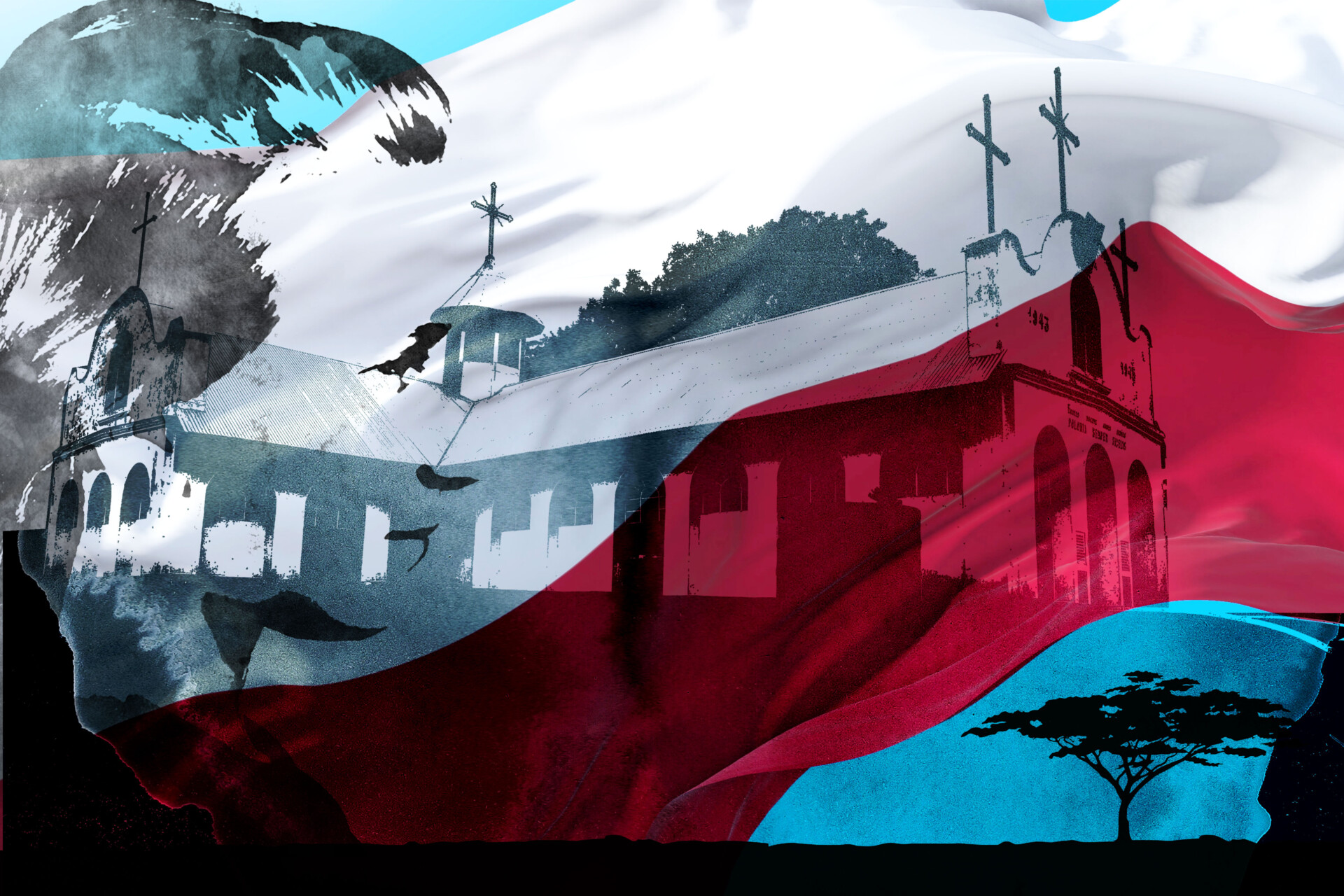
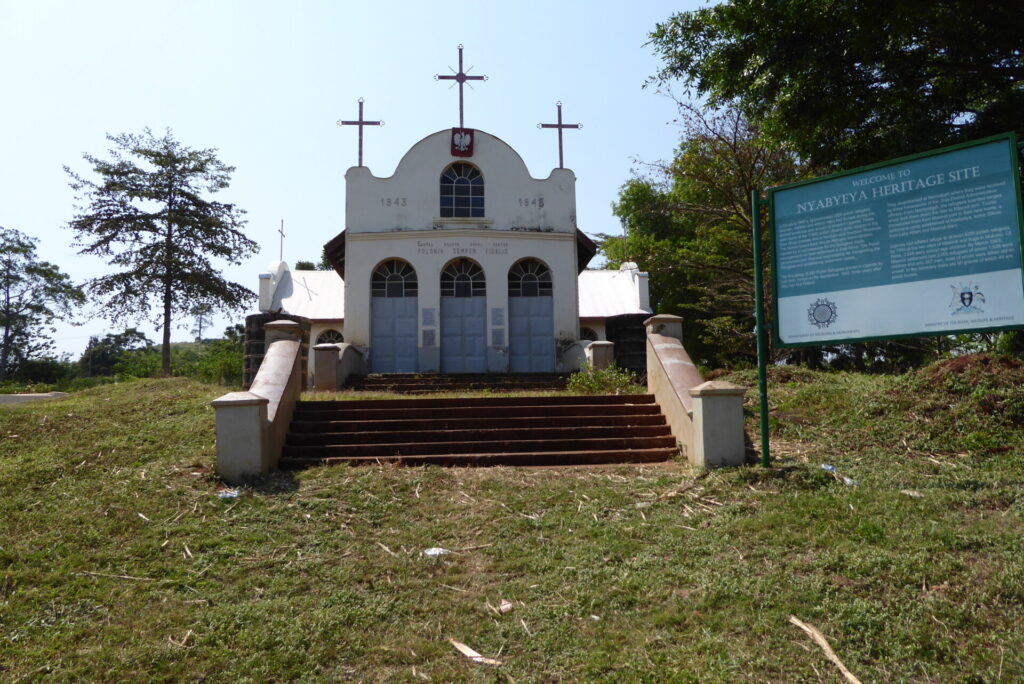
In a remote part of western Uganda, just south of the Murchison Falls National Park, tucked outside the village of Nyabyeya, stands an incongruous building: the Our Lady Queen of Poland Church, standing on a small hill overlooking the surrounding forest. This Catholic church was constructed between 1943 and 1945, its white walls built to resemble a European cathedral, with crosses adorning its roof. The inscription at the church entrance is written in four languages — Polish, English, Latin and Runyoro, the local language. The graveyard contains a disproportionately high number of children’s graves, many of whom seemingly died at birth. A few raised mounds dotted across the cemetery indicate the final resting places of people whose names are now lost to history.
This is the site of a former refugee camp, where over 3,000 displaced Poles made their homes during World War II. Visiting the erstwhile Nyabyeya settlement and church, one is struck by its remoteness, even with modern road infrastructure. During the one-hour drive from Masindi, I passed savanna vegetation, villages and farming plots set against a hilly green backdrop. Here, Barbara Porajska lived for five years, as she recalled over 40 years later in her autobiography, “From the Steppes to the Savannah,” published in 1988. She wrote about lessons in the Nyabyeya settlement school, singing in the children’s church choir and befriending Farasico, the young man her parents employed as a housekeeper. Her memoirs reveal the hardship endured by Polish refugees, their reactions to a radically new environment, and the tension between their camaraderie with the local population and the insidious effects of white supremacy and racism.
The church and cemetery are almost all that is left from this little-remembered event in Ugandan — and African — history, when the country took in over 7,000 displaced people in total from Poland between 1942 and 1948. They lived in relatively isolated communities in remote settlements, far removed from European expatriates already living in Uganda. With the help of African laborers, they built their own schools, hospitals and church, constructing self-sufficient communities that were managed by the British protectorate government and guarded by African soldiers, known as “askaris.” The Poles developed ostensibly friendly relations with the African Ugandans with whom they interacted in the camps. However, a closer look at the sources shows that beneath this veneer lay the same structural racism that was pervasive throughout the British Empire.
The summer of 1939 remained etched in Barbara’s memories as “the very last, carefree summer of my childhood in my native Poland,” she wrote. Life as the 10-year-old knew it then changed overnight: The onset of air raids killed her beloved dachshund Gogo, and her cousin Roman was killed by a bomb on a train. When her home region of eastern Poland was invaded by the Soviet Union, her private Catholic school became secular. Gone was the iconography of Mary and Jesus, replaced by “portraits in ugly frames of Lenin and Stalin, red paper flowers and red paper ribbons.” Most sinisterly, her father, an enemy of the Soviet Union, was arrested.
In August 1939, Nazi Germany and the Soviet Union signed the Molotov-Ribbentrop Pact, which essentially carved up Eastern Europe into Nazi and Soviet spheres of influence. For Poland, this entailed being divided in two: The west became Nazi-occupied, while the east became Soviet territory. The USSR wasted no time in deporting those it regarded as anti-Soviet, targeting Poles from across the social spectrum. Between 1939 and 1941, 300,000 Polish citizens were forcibly displaced and sent to remote areas across the USSR, either to “corrective” labor camps or to settlements where they endured forced labor. Women and children were sent to work on remote farms. Porajaska and her parents and older sister Ala had lived a comfortable middle-class life in Lvov — now Lviv, the largest city in western Ukraine — until the Soviet invasion in 1939. Her father, chief commissioner of the Lvov police force — and therefore a prime suspect as an anti-Soviet threat — was arrested almost immediately and his family did not hear from him for almost a year. Barbara, Ala and their mother were sent on a long journey across Soviet Asia, moving from kolkhoz to kolkhoz — working in these agricultural collectives that consisted of state-run farms operated by peasant labor.
This precarious situation officially ended on July 30, 1941, when the Sikorski-Mayski agreement between the USSR and the Polish government-in-exile in London was signed, following the Nazi invasion of the Soviet Union the previous month. The accord, among other terms, stipulated the release of all Polish citizens forcibly displaced across the USSR, as well as the Polish army joining the Allies in the war against Hitler’s Axis. Due to the need for troop enforcement in North Africa, Polish soldiers, along with their families, were transferred to Iran from March 1942 onward. Barbara and her family faced precisely this fate after reuniting with her father, who joined the Polish army after his release from prison. Arriving at the Iranian port of Pahlavi (known today as Bandar-e Anzali), they were met by British army officials. From there, they were transferred inland to Tehran, before being moved from camp to camp across Iran. While still enduring discomfort in those settlements, the situation was infinitely better than what they had experienced in Kazakhstan and Russia. Although technically civilians, as families of soldiers, they were transferred to camps for management and administrative purposes by British authorities.
Britain did not want the Poles to stay in Iran for too long, because they were becoming liabilities in the war. The settlement camps were located too close to the war theaters and the presence of refugees made the existing food shortages in Iran even more severe. In a memorandum in July 1942, Britain’s Foreign Secretary Anthony Eden proposed moving the refugees to British territories in eastern and central Africa, to the Union of South Africa and to India. Uganda was one of the African territories chosen by the British government to host the refugees to “do its bit” for the war effort. The country was in a convenient location, far from the front lines. In later correspondence between the headquarters of the International Refugee Organization (IRO) in Geneva and the Colonial Office in London, it is clear that the British protectorate government in Uganda was reluctant to receive any refugees, arguing that the country was unsuitable for European settlement, given its official position as a protectorate, rather than a colony. Hubert Arnold Curtis, the IRO regional representative for eastern and central Africa, based in Nairobi, also intimated in a letter to the headquarters that he suspected that British officials in Uganda were personally prejudiced against Poles, explaining their unwillingness to accept them.
Most Poles were terrified at the prospect of moving to Africa, with fears of “savages” and “cannibals” at the forefront of their minds. Lucjan Krolikowski, a Polish seminarian also sent to East Africa, recalled in his book “Stolen Childhood: A Saga of Polish War Children” that women with children especially harbored fears based on racist stereotypes. “Would resettlement somewhere near the equator in an unhealthy climate, among wild animals and half-wild people, not exhaust the last remnants of their children’s strength?” he wrote. “And would it not be altogether detrimental to the children?”
Along with 19,000 other Poles headed for the African continent, the Porajska family departed from Karachi, the closest port to Iran from which ships set sail for East Africa, arriving in Kenya in November 1942. The Polish refugee community — mostly women and children — settled across the British imperial territories in Africa. By 1944, Tanganyika, now Tanzania, and Uganda had received 6,250 refugees each, the highest in all of Africa. Northern and Southern Rhodesia — now Zambia and Zimbabwe — accepted 2,850 and 1,350, respectively. Kenya was home to 780 refugees at the time, while the South African Union hosted 500 refugee children. Their settlement across the continent was coordinated by the East African Refugee Administration in Nairobi.
And so on Nov. 9, 1942, the 13-year-old Barbara Porajska stepped off a boat — “The California” — at the port of Mombasa, on the coast of the British colony of Kenya. She was ready to begin a new chapter with her family in East Africa, after years of hardship and displacement from Poland. From Mombasa, Barbara and her family began the long journey inland via train through Nairobi and Eldoret in Kenya, before reaching Namasagali in Uganda. There, they boarded a barge on the Victoria Nile, sailing to Masindi port in western Uganda, where they were picked up by lorries. From there, they were driven through savanna grasslands and thick rainforest, before reaching their final destination in Nyabyeya.
In Uganda, the Poles were settled in two camps: one in Koja, present-day Mukono District, close to a Lake Victoria peninsula, and the other in Nyabyeya, 15 miles from Masindi and just south of Murchison Falls National Park. The Porajska family was housed in the Nyabyeya settlement. Both camps were very remote geographically, far from any major urban areas or centers of power. This choice was made intentionally by the British administration in Uganda, arguing that the Poles needed to be settled where large swaths of empty land were available.
Before the arrival of the Polish refugees in Uganda, 3,000 African laborers cleared large sections of forest in Nyabyeya and Koja to construct huts for the settlements. In her memoirs, Barbara describes the “couple of hundred natives [struggling] with nature, hacking with big, broad knives at trees, bushes, tangled roots and two-metre-high elephant grass.” Nyabyeya housed over 3,600 Poles, while Koja was home to 3,000, with each camp run by both Polish and British officials. It was not long before they developed self-sufficient communities in both settlements, each containing a hospital, schools, a church, a community center and a post office. Across the East African camps, some women found employment outside the camps as housekeepers for European expatriate households, as cooks in hotels or as storekeepers and clerks in the army. These were semiskilled jobs that no European in East Africa would do but were commonly performed by either Indians or sometimes Africans.
Porajska attended lessons, which were taught in Polish, at the secondary school in Nyabyeya, where her subjects included English, French, Latin and music. A Polish missionary who had been living in Uganda since before the war donated school supplies to support the children’s education. Nyabyeya also had a youth club with a gramophone and a piano transported from Kampala, the Ugandan capital, which provided ample entertainment for Barbara and her friends. She was an enthusiastic member of the Girl Guides movement — which, along with the Boy Scouts, flourished across all the Polish settlements in Africa — and sang in the community church choir, as she fondly recounted in her memoirs.
After a year of holding Mass in the open air under a tree, the camp community decided it was time to build a church. The Porajskas “gave as much as [they could] afford” to the community donation collection for its construction. After a site blessing by the priest, African laborers began building, which took two years. “It [looked] so solid,” Barbara wrote, “that I [began] to wonder if we [were] ever meant to leave Masindi.” One can understand the refugees’ happiness with the church: Standing on the steps overlooking the valley, one is struck by the lush backdrop of the forest and blue sky, with the only sound coming from the wind rustling through the trees. It must have been an idyllic place to worship.
The Polish community regularly interacted with the African Ugandans they encountered in their settlements. The camps offered economic opportunities for Ugandans to work as housekeepers or groundspeople, or to sell produce. There are no written accounts by Africans of the Polish presence in Uganda, so we cannot be completely certain of how this period in history was perceived. The Luganda-language newspaper Matalisi praised the Poles for their nondiscriminatory conduct toward Africans in an article published in October 1942. In a 2011 interview with the Ugandan broadcasting channel NTV, Amos Kabwijamu recalled selling mangoes to the Poles in the Nyabyeya camp, and could even remember a few Polish words that some of the refugees taught him. The Porajska family employed a young man, Farasico, as a housekeeper, who quickly mastered conversational Polish. In turn, Barbara attempted to learn Swahili, and her “first attempt to talk to him in his native tongue [met] with his delight and uncontrollable laughter.” Some Polish women in both Nyabyeya and Koja developed romantic relationships with some of the African askaris stationed to guard the camps — unsurprising, given the number of single women in the camps. Sexual relations between Polish women and African men across all the camps on the continent were not unusual, much to the consternation of British officials.
Despite such reports of friendliness between the communities, a closer examination of Polish-Ugandan relationships reveals the entrenched anti-Black racism that had cemented white supremacy in colonial Africa. This is notable in Porajska’s own memoirs, in which her descriptions of Africans evoke images of the “noble savage,” a racist stereotype perpetuated and internalized by Europeans in the colonial period. Porajska describes Africans’ visible otherness: “their teeth, exposed in a broad grin, are sparkling white but their smooth, shiny skin is much darker than expected.” In spite of what she calls her “friendship” with Farasico, a 20-year-old man, she still describes him in a patronizing manner as a “boy” in her memoirs. When she heard him singing, she initially thought “he [was] praying to one of his many gods.”
Her reflections highlight pervasive racism. “We later learned that he is a Christian and, like us, worships only one God and the muttering is not a prayer but a jungle song,” she recalled. Farasico, it seems, was well aware of the nature of his relationship with the Porajskas, which Barbara noticed: He “[knew] he [had] to keep his distance; we, the white race, [were] the masters and … he never [entered] the hut without permission.” Another child refugee in Africa reflected, as an adult: “I learned to be a racist. For no other reason other than being white, I could travel first class on the train while native Africans could not.”
The Polish refugees occupied a curious in-between status in Uganda. The British government in Uganda — and in other territories — had constructed a tripartite racial hierarchy, with white people at the top, Asians in the middle and Black people at the bottom. The presence of white Polish refugees disrupted this hierarchy, as they were considered peasants by the British in Uganda — even though the Porajskas, for example, had been part of Poland’s middle class. The Poles arrived in East Africa completely dispossessed of almost all belongings, lending them the status of “poor whites.” They did not fit into conventional colonial settler society, which largely consisted of Britain’s upper classes. It was partly for this reason that the settlements in Uganda were constructed so remotely: to minimize the disruption that the Polish presence would cause to the racial and social hierarchy. On a trip through Masindi, the white Kenyan settler Elspeth Huxley expressed her curiosity at seeing white peasants: They lived in huts “mud-built in native style, and it was strange to see white faces instead of black ones peering out of the doorways.”
The fact that most of the refugees were women further unsettled the highly patriarchal white colonial society in Uganda, especially as some of them willingly had sexual intercourse with African askaris. As Lingelbach argues, this voluntary transgression of the boundaries of whiteness posed a threat to the community and colonial social order, especially since the role of white women in colonial Africa lay in the preservation of white culture and bearing white children. Polish women who slept with African men were labeled “prostitutes,” confirming British stereotypes about the promiscuity of Eastern European peasant women, whose sexuality was seen as requiring control.
In February 1944, the Koja Camp Commandant reported two Polish women who had slept with African men in writing: “Not only do cases of this kind lead to a bad reputation being undeservedly given to Polish people as a whole … [but] I cannot help feeling sympathy with a young African Policeman whose character is ruined by the experienced importunities of a degraded street walker from some Polish town.” Assuming that the relations between the Polish women and African men were consensual, the sexism in this statement is blatant, especially as the commandant also recommended the immediate removal of the two women from the camp. There were no reports of children leading from these relations between Polish women and African men in Uganda, though this certainly happened in other African countries.
The Polish refugees did not stay in Uganda for long, and were never permitted to settle. When World War II ended in 1945, Uganda’s British administrators had no interest in hosting Polish refugees any further. They were dealing with enough problems with African demands for independence, and saw the community of Poles increasingly as a burden. The IRO took over refugee administration and arranged for the Poles’ departure from various African countries and resettlement elsewhere. Very few wanted to return to Poland, given that it was now part of the Soviet bloc, and a large number wanted to stay in Uganda. Eventually, the Polish communities settled around the world in countries including the United Kingdom, Australia and France. A handful remained in Africa. The IRO closed the Nyabyeya camp and sent the remaining inhabitants to Koja, which, in turn, was dissolved in 1951. The Nyabyeya settlement was converted into the Nyabyeya Forestry College in 1953, which still stands to this day. The remaining refugees in Koja included the very old, infirm or mentally unwell, who were eventually transferred to the Tengeru camp in Tanganyika. The Porajskas were among the refugees in the Nyabyeya settlement who relocated to Britain in 1948. Even before leaving, Barbara was looking forward to the individual independence once they left the settlement, excited for her family to lead “its own individual life, managing their own affairs the way it [suited] them.” Permanent settled status in East Africa was never on the cards for the Polish refugee communities.
The descendants of the Polish refugees in Uganda are scattered all over the world. Public history projects by diverse Polish communities, online blogs and articles indicate a large level of interest from descendants in engaging with this part of their history. The Polish Embassy in Nairobi plays a key role in preserving this memory: It funds the maintenance of the church and graveyards in Nyabyeya and Koja, and organized an exhibition on the Polish refugees held at the Uganda Museum in 2018. In 2021, together with the Polish development organization Polska Pomoc, the embassy financed the construction of a maternity ward at the Nyabyeya Health Center, in gratitude to the community that hosted the refugees over 70 years ago.
In the years following WWII, Uganda hosted refugees fleeing the Sudanese Civil War in 1955 and others from Rwanda in 1959. Ugandans themselves are no strangers to fleeing conflict: During the years of the brutal dictatorships of Milton Obote and Idi Amin from the 1960s until the 1980s, many found sanctuary in the neighboring countries of Kenya and what is now South Sudan. That the country has itself produced countless refugees might partly explain its contemporary openness to receiving them. Uganda today hosts more refugees than anywhere else in Africa, and is the third-largest host country in the world, with 1.6 million refugees from countries including the Democratic Republic of Congo, South Sudan, Sudan, Somalia and Eritrea. In 2021, the country briefly took in Afghan refugees fleeing the Taliban. Many analyses of this policy cite the Polish refugees as the case study that sparked Uganda’s modern-day generosity, although the comparison is inaccurate.
While the Polish refugees are a part of Ugandan history, they are not a precursor to the country’s contemporary refugee policy. Their story, instead, illuminates the power structures in this part of the world at that moment in history. Though the Poles were displaced from everything they knew and forced into poverty, they still benefited from — and perpetuated — a system built on white supremacy. Today, their churches and graveyards remain, though their presence is largely forgotten. Yet their history is a reminder that displacement is not just about where people go, but about who is allowed to belong, and on whose terms.
Updated July 28, 2024
Ozempic is a weekly injection that is approved to treat type 2 diabetes. Its active ingredient is semaglutide and Ozempic is part of the glucagon-like peptide-1 (GLP-1) receptor agonists class of drugs.
This medication has recently gained traction in the media because of its hunger control capabilities, causing some people to use it as a weight loss drug. However, like all medications, Ozempic comes with side effects. Learn more about this medication and how Ozempic works.
Ozempic is a useful drug for managing blood sugar levels if you have type 2 diabetes. Semaglutide mimics the hormone incretin that’s naturally found in your body and tells your pancreas to produce more insulin. When your body produces more insulin, it can turn the glucose sugar in the food you consume into energy. Essentially, it helps your body get more from the food you eat.
Ozempic also slows the speed at which food moves through your stomach, which is known as gastric emptying. This gives the body more time to digest the food and pull nutrients from what you eat. Slowing down your digestion can also make you feel fuller for longer, reducing your chances of overeating.
Ozempic is approved to treat type 2 diabetes, but it can also be used for weight loss. This is because the medication changes how your body digests food and how your brain responds to food cravings.
Ozempic is exclusively approved to treat type 2 diabetes, but patients increasingly take this medication for weight loss. This is because semaglutide slows down your digestion and makes you feel full. This medication is also known to bust food cravings by turning off the part of your brain that says you're hungry.
If you’re considering taking a weight-loss medication, your doctor might prescribe Wegovy, which is a weight-loss medication that also uses semaglutide and works like Ozempic.
Though medication like Wegovy can help you lose weight, it’s not meant to be used by itself. Your doctor will recommend a balanced, well-portioned diet and regular exercise routine to make your weight loss sustainable.
Ozempic was approved as a medication to treat type 2 diabetes in 2018 in Germany and continues to be approved and recommended by various other medical agencies around the world. It’s an effective medication for people who have high blood sugar levels and need to increase their insulin production to better process glucose. One important benefit of Ozempic is that it can be combined with other blood sugar-lowering drugs, helping patients with type 2 diabetes take control of this disease.
Ozempic is recommended for people who have not been able to manage their blood sugar through diet and exercise. Whether you use this medication for type 2 diabetes or weight loss, your doctor will recommend maintaining a healthy diet and adopting good exercise habits. These can support your diabetes management.
Every patient is different, which means some people might have a more severe reaction to Ozempic than others. Some patients might have mild side effects or none at all. A few common side effects of this medication include:
Nausea;
Vomiting;
Constipation;
Diarrhea;
Abdominal pain.
The side effects are often most notable when you first start taking the medication or if you have a dosage increase. As your body gets used to Ozempic, the side effects may fade.
Ozempic is safe for the majority of patients, but some rare side effects can be severe. Patients may develop stomach paralysis if the food in their digestive tract stops moving entirely. Some patients may also develop pancreatitis, which is inflammation of the pancreas.
Talk to your doctor about your side effects if they disrupt your life. If you have a severe reaction to Ozempic, seek medical care immediately.
Ozempic is one of the best-known injectable medications to treat type 2 diabetes on the market. However, there are different prescriptions your doctor might recommend based on your health and experience with semaglutide. Here are a few other options.
There are many reasons why your doctor might recommend Ozempic compared to the other options listed here. They might have heard of and researched the medication, which makes them feel more comfortable prescribing it to patients. Each doctor has their own experiences and personal preferences when writing prescriptions.
While Ozempic can be a useful tool for treating your type 2 diabetes or starting your weight loss journey, it isn’t a miracle drug that works on its own. You can support this medication by making healthy lifestyle changes that will help your body even if you stop taking the drug. Here are a few considerations to keep in mind if you want to maximize the effects of Ozempic.
Adopting healthy habits related to diet and exercise can support your body in several ways. You might discover that you have more energy, can concentrate more at work, and have a stronger immune system.
If you have type 2 diabetes, your doctor may recommend Ozempic to regulate your blood sugar levels. This injectable, when paired with diet and exercise, can help you live a healthy, happy life.
Disclaimer:
The information provided on this website is for general informational purposes only. It is not intended as medical advice and should not be used as a substitute for professional consultation, diagnosis, or treatment. Always seek the advice of your physician or other qualified health provider with any questions you may have regarding a medical condition. Never disregard professional medical advice or delay in seeking it because of something you have read on this website. If you think you may have a medical emergency, call your doctor or emergency services immediately.

I have always longed to be known, truly known, by another human being. Sometimes we live for years with yearnings that we cannot name. Until a crack appears in the sky and widens and reveals us to ourselves, as the pandemic did, because it was during lockdown that I began to sift through my life and give names to things long unnamed. I vowed at first to make the most of this collective sequestering: if I had no choice but to stay indoors, then I would oil my thinning edges every day, drink eight tall glasses of water, jog on the treadmill, sleep long, luxurious hours, and pat rich serums on my skin. But, only days in, I was spiralling in a bottomless well. Words and warnings swirled and spun, and I felt as if all human progress was swiftly reversing to an ancient stage of confusion: don’t touch your face; wash your hands; don’t go outside; spray disinfectant; wash your hands; don’t go outside; don’t touch your face. Did washing my face count as touching? I always used a face towel, but one morning my palm grazed my cheek and I froze, the tap water still running. I was alone in my house in Maryland, in suburban silence, the eerie roads bordered by trees that themselves seemed stilled. No cars drove past. I looked out and saw a herd of deer striding across the clearing of my front yard. About ten deer, or maybe fifteen, nothing like the lone deer I would see from time to time chewing shyly in the grass. I felt frightened of them, their unusual boldness, as though my world was about to be overrun not just by deer but by other lurking creatures I could not imagine. My joints throbbed, and the muscles of my back, and the sides of my neck, as if my body knew too well that we are not made to live like this.
In this new suspended life, I one day found a gray hair on my head. It appeared overnight, near my temple, tightly coiled, and in the bathroom mirror I first thought it was a piece of lint. A single gray hair with a slight sheen to it. I unfurled it to its full length, let it go, and then unfurled it again. I didn’t pull it out. I thought: I’m growing old. I’m growing old and the world has changed and I have never been truly known. A rush of raw melancholy brought tears to my eyes. This is all there is, this fragile breathing in and out. Where have all the years gone, and have I made the most of life? But what is the final measure for making the most of life, and how would I know if I have?
To look back at the past was to be flooded by regret. I don’t know which came first—whether I began to nurse regrets and then Googled the men in my past, or whether Googling the men in my past left me swamped with regrets. I thought of all the beginnings, and the lightness of being that comes with beginnings. I grieved the time lost in hoping that whatever I had would turn to wonder. I grieved what I did not even know to be true, that there was someone out there who had passed me by, who might not just have loved me but truly known me.
In January, when the world knew of the virus brewing in China but lockdown was still unimaginable, Aunty Jane came to our house in the village and asked to see me. My mother’s sister and manic shadow, who made everybody’s business hers. I was packing for my return to America. I was bloated from too much Christmas chin-chin. I didn’t feel like seeing Aunty Jane; I already knew what she wanted to talk about, but I had never learned to disobey relatives older than me.
“Chia, you’re running out of time!” she said, as soon as I stepped into the living room. “Your only option now is I.V.F. I know somebody that just had twins at forty-five. But you have to hurry up if you want to use your own eggs. Stop travelling up and down, and find a man to do I.V.F. with. Or you can use donor sperm. All this travel—one day you will be tired and, without a child, your life will just feel empty and meaningless.”
It might sound cruel, but it wasn’t; she was only being benignly blunt, as Nigerians are wont. I was forty-four and I did not have a husband and I did not have a child, a calamity more confounding because it was not for lack of suitors.
“So a husband is no longer necessary, Aunty?” I said, laughing. “You should have told me this ten years ago.”
How slippery moralities are, how they circle and fade and change with circumstance. Imagine if I had decided to have a baby ten years ago, without a husband. Imagine my aunt’s horror.
Podcast: The Writer’s Voice
Listen to Chimamanda Ngozi Adichie read “Chuka.”
“There was still hope ten years ago,” Aunty Jane said, unamused.
“Aunty, I am praying,” I said. I always said what women confronted with the crime of singleness said: I am praying, please pray for me, my own will come by God’s grace. It was easier to pretend that I was as broken by singleness as I was expected to be. People did not easily believe that you longed for the unusual.
“Chia, what really happened with Chuka?” Aunty Jane asked.
“We just didn’t make a good match.”
“But you were engaged.”
In response to my silent shrug, Aunty Jane prodded: “Did you discover something?”
“No. It just didn’t work out,” I said firmly, and hoped she would leave it alone. If I had said that he beat me, or he was not actually divorced, or he was seeing another woman, Aunty Jane would have understood. Real meaty reasons, with sympathy poured on me, and opprobrium on him. But she would never have understood the truth, that I broke up with Chuka because I could no longer ignore that exquisite ache of wanting to love a lovely person that you do not love.
We met at a Nigerian wedding in Indiana. I hadn’t wanted to go, but my mother said she and my father couldn’t come and I would have to represent them. Febechi told me, “There’s somebody here that is perfect for you. You people fit each other, children of Big Men.”
I didn’t know Febechi well; we had been classmates in secondary school, and even then she had always joked about my father with a slyness that felt too close to spite.
“Febechi, please let me eat my rice in peace, biko.”
Nigerian wedding introductions were so lacking in wonder, so predictable, so planned that they could not end with marriage as I believed marriage should be, a merging of two souls. And what slim sad pickings: weary men in search of a Nigerian wife, any Nigerian wife, but preferably a nurse, because somebody somewhere had convinced Nigerians in America that nurses made good money and that men could not be nurses. Once, at a wedding in Houston, I overheard a man ask, “Are you willing to train as a nurse if we go ahead?”
Febechi ignored my groaning and brought Chuka to our table. He was umber-skinned, built as if he played rugby, his mustache linked to his short beard by a thin groomed line, his bald head shining in the ballroom’s chandelier light. There was a leonine quality to him. You noticed him; he subdued space. It surprised me that he needed to be introduced to anybody at all. He had an unusual self-possession, as though he would face emergencies with genuine calm. He was nine years older than me but seemed even older; not aged but vividly grown up, like an adult archetype, so courteous and proper, so sensible. He must have been a prefect in secondary school, the kind who was liked by both students and teachers, who could quiet a rowdy classroom but would also sneak out with friends for beer and cigarettes.
“It’s nice we both live in the D.M.V. area,” he said that first day, with quiet anticipation, and I smiled and said, “Yes.”
The living room of his house, outside Washington, D.C., reminded me of our house in Enugu: tan leather sofas, a tan coffee table, and heavy tasselled tan curtains. I felt, for a moment, the strange sensation of being pursued by the past.
“Everything matches,” I said in dismay, without meaning to sound dismayed.
“Is that bad?” he asked.
“No, no, of course not.”
“You can change whatever you want to change.”
He signalled permanence almost right away. “Chia, I’m too old to play games. I saw your picture on Febechi’s Facebook page and told her I wanted to meet you. My intention is marriage,” he said, and I said nothing, knowing he would hear acquiescence in my silence. I had always imagined my choice of husband would be like my choice of profession: unusual, but not so unusual as to alienate my parents. Somebody foreign, but not too foreign, with poetry in his soul. Not a successful Igbo engineer who still shined his shoes with the Kiwi polish that everybody’s father in Nigeria had used. Where did he even buy the tin?
Each day with Chuka I encountered his otherness. He made his bed as soon as he got up, sheets pulled taut and straight, and wore his shirts neatly tucked in, even on weekends. In his closet, his socks were curled in neat rows. He read books I did not think of as real books, about leadership and project management. He wrote his name, Chuka Aniegboka, on the title pages, at the top right corner, in a geometric hand, which gave me an odd rush of nostalgia, because I had last done that in primary school. He listened to the BBC World News every morning. He liked films that bored me, formulaic thrillers, and he watched them with intense focus. If I spoke, he would pause the film and say, “I don’t want to miss anything.”
“But we already know what will happen!” I would tease.
He lifted weights in the basement, his toolboxes were tidily arranged in the garage, and he closed the jam jar so tight that I could not unscrew the lid myself. One day, watching him replace a door handle on his deck, I thought guiltily that he was like that door: sturdy, reassuring, uncreative. He always ordered a well-done steak at restaurants, never anything else, and back home he would promptly microwave a portion of jollof rice, which came in flimsy plastic containers from a Nigerian caterer in Baltimore, saying that restaurant food never left him full. He crossed himself before he ate, and I thought about how I had stopped crossing myself years ago, because it felt unnecessary and showy. I planned a trip to a Broadway play, and he fell asleep in the middle of it. I nudged him awake, and he said, “Sorry, I should have had coffee at the hotel,” as if it was caffeine rather than interest that should keep him awake. He suggested brunch at the Four Seasons and I suggested something less stuffy.
“O.K.,” he said, doubtful but willing. “It’s just that the Four Seasons is a trusted brand.” His was a life of faith in trusted brands. He flew only airlines that were “mainstream,” even if it meant multiple connections, and he was astounded that I never flew British Airways. He agreed that the airline was pompous and, yes, a kind of petty pleasure always lit up the flight attendants’ faces as they demeaned Nigerian passengers, but was that reason enough to make him fly airlines that nobody really knew? Whenever I travelled, he dropped me off and picked me up at the airport, asking only if my trip had gone well, seeking no details of my adventures. He did not understand, he could not possibly understand. I imagined him saying, “You have a degree from a good school—why not get a proper job? You can still do your writing on weekends.” He didn’t say this, he never did, but I imagined the words itching to roll off his tongue. He read my articles and always said, “Nice,” as if tasting a tolerable food that still does not appeal.
He read my article about Greece, which began, “How do other tourists tolerate the smell of donkey shit in Santorini?” Afterward he said, vaguely, “Very nice.” Not just his usual “Nice” but “Very nice,” which must mean the donkey shit offended the properness at his core.
“I liked the other islands,” I said, in penance. “We should go together when you’re on vacation.”
“We should go to Dubai,” he said. “It’s a miracle of engineering and political will. Really what Nigeria should be.”
I thought Dubai all sterile kitsch, but it did not surprise me that Chuka liked it, because Nigerians liked Dubai. He was a harking back to my Nigerian life, familiar but now made exotic by the wide gorge that separated me from it. He told me, “I don’t want to rush you,” as boys said to girls they were serious about; it made you special, exempt from the sex-haste reserved for less deserving girls. I wasn’t even sure I wanted to sleep with him at all. It took months before I let him undress me in his bedroom. I didn’t really want to, but I felt I should, because I did like him and I was by most measures his girlfriend now and he somehow deserved it, being so proper and attentive. It would be predictable, I was sure, even perfunctory, but at least not unpleasant. How unutterably wrong I turned out to be. Chuka startled me with new and unexpected pleasures; doors never opened were suddenly flung apart, our bodies in riot and all the old laws undone. “You’re so sweet, you’re so sweet,” he said, forceful and urgent, until I was heady with earthly power. I felt for the first time in my life an intensity of forgetting, those brief raw moments of bodily transport, of physical oblivion. Afterward I lay dazed. “I love you,” he said, and I said, “What did you just do to me?” Already I wanted a repeat. Already I wanted and wanted.
Iwas telling Chuka a story about primary school, how the other children called me Milk Butter, because my hands were soft:
“I was maybe nine, and another school had come to ours for a debate competition. We were asked to shake hands and one of the boys let go of my hand very quickly, as if my palm was hot, and he said, ‘Your hand is too soft!’ I remember the debate topic: ‘Doctors are more important than lawyers.’ Our school won. I think that boy was just angry about losing, and so he started taunting me—‘Softy-softy hands, you don’t do any work at home, you’re not strong, you just eat milk and butter’—and soon the other children were calling me Milk and Butter, which then morphed to Milk Butter.”
“Milk Butter,” Chuka repeated, and reached for my hand. “So soft. That boy wasn’t wrong.” He was running his thumb over my palm and I was thinking of his tongue. My life had become a scattering of unexpected eroticism.
“You have the hands of a laborer,” I teased. “So rough.”
“Oh, my father did not play—I could change a car tire by the age of eight. When I moved to Lagos for university, I was so shocked to see men getting manicures in salons.”
“You should come with me to get a manicure.”
“I’ll do anything for you, but manicure in a salon? Mba.”
I loved his saying no to a manicure, and I loved it only from him. From other men it would have been laughably backward. But Chuka was my old-fashioned fantasy, a manly man, he could sweep me into his arms, pick me up as if I weighed nothing, carry me, protect me. Refusing a manicure fit just right.
I would watch him immersed in the mundane and see only sensuality: Chuka cleaning his kitchen counter, thorough and broad-shouldered; Chuka paying for groceries at Whole Foods; Chuka driving, eyes trained on the road. Even his reticence with his friends felt sensual.
I watched him at cookouts in his friends’ yards during that summer’s lovely languid days. I liked to sit and listen to the loud Nigerian voices, sheltering in their presence, enjoying the newness of it, because I did not often go to Nigerian gatherings.
“Take her out of that public school now, before she comes home and starts twerking,” somebody said.
“Imagine, one white patient came into my consulting room and asked me where the doctor is, in this state of Maryland!” another said.
“There is somebody in Bowie who can organize a real goat for you,” somebody else said.
Chuka’s closest friends in America, Enyinnaya and Ifeyinwa, hosted Saturday gatherings at their house in Bethesda. Ifeyinwa was the kind of Igbo woman who intimidated me: sure-footed, bristling with capability, always able to handle things, contemptuous of any foolishness. She had a big job with the county, and I imagined her dogged climb up the ranks while raising children and getting a master’s degree or two. She was tall and wore a short side-part wig that was uninterested in looking realistic. I desperately wanted her to like me. I brought bottles of wine when we visited. I sprang up to help her serve puff-puff and meat pies.
“Thank you, my dear, but please just sit down and relax,” she said.
She wasn’t unfriendly, but her coolness created distance. One Saturday, Chuka said that Ifeyinwa’s sister was visiting from Nigeria, but I didn’t see her until late in the day, when the other guests had gone. She walked into the kitchen, in a cloud of heavy perfume. Upon seeing a beautiful woman, animosity erupts unprompted in some women. I knew from experience how to diagnose it. At first, I thought Ifeyinwa’s sister was afflicted with it, how she radiated hostility, not acknowledging me in a way that made clear she was not acknowledging me. She filled a glass with water, and then I realized that it wasn’t me. It was Chuka. The flounce in her manner. She was ignoring Chuka. That stir of defiance, even vengefulness, was for Chuka. They had a history. Or more than a history. What was their story? I felt a breathless stab of jealousy. Her long lustrous weave fell in waves to her shoulders. Her designer jeans were slightly pinched at the crotch. To douse the sudden charged air after her sister left with the glass of water, Ifeyinwa said, “Chuka, biko come and help me open this thing.”
Witnessing Chuka’s effect on Ifeyinwa’s sister left me shaken. I saw him anew and admired him anew, his vitality, the controlled, sustained energy of him. When he went to the living room, I followed. I sat by his side. Until we left, I kept him always in my sight, my jealousy mounting, climbing, enveloping me.
“Ifeyinwa’s sister was not very sociable,” I said in the car, and then wished I had simply asked what their story was.
Chuka sighed and said that Ifeyinwa had introduced her sister to him just after his divorce; they met once and he wasn’t interested. He had never given her any hope, never played games. He didn’t understand why she was so angry.
“Because she wants you,” I said, suddenly light from relief. “Who wouldn’t want you?”
His smile was barely there, as if he didn’t quite know what to do with compliments.
One day, I overheard Ifeyinwa say to a friend, laughing, “Any Igbo man from Anambra State will cheat with a woman if she cooks ukwa for him. That’s why I married from Imo State. I didn’t want to lose my husband to ukwa.”
Chuka and I were always the last to leave, and so, in the waning evening, I went to the sink and began to rinse glasses and load the dishwasher.
“Oh, no . . . ,” Ifeyinwa started to protest.
“Sister Ify, I’ve been looking for ukwa to cook for Chuka,” I said, a lie I had not planned on until it came floating out of my mouth. I hated the mealy oiliness of ukwa, and I had no idea how it was cooked.
Ifeyinwa squinted slightly at me, surprised, no doubt thinking that this Big Man’s daughter, with her “travel writing” frippery of a job, was still solid enough to want to make ukwa for her man. It made me redeemable. She told me to try the African market in Catonsville. Days later, from the back of the store, with its musty smell of stockfish, I sent her a text saying, “Just bought ukwa, thank you!”
As the cashier rang me up, an African American woman in line behind me peered at the register and said, “Whatever that is better be worth it!”
I smiled at her. “It is,” I said. “It’s a delicacy from the southeastern part of Nigeria. Breadfruit. I’m making it for my fiancé.”
More words sailing unplanned out of my mouth. How was I slipping on this new persona like a T-shirt? I cooked from a YouTube video and laid out a surprise dinner for Chuka on my dining table.
“Chia!” he said, lifting the lid of the Dutch oven. “Ahn-ahn! Where is this from? You can make ukwa? Baby, thank you, thank you so much.” Something about his expression made me teary. How easily he was made happy, how uncomplicated his conditions for fulfillment.
Soon afterward, Ifeyinwa began teasing Chuka about our getting married. Her approval felt like an accomplishment and warmed me like a compliment.
“Why are you wasting time, Chuka? See Chia’s pointed nose? Your children will win beauty contests.”
“Chia is the cause of the delay,” Chuka said.
“Don’t mind him!” I said, to appear eager for marriage, as she would expect.
Enyinnaya looked up from his phone screen.
“Look at this young Nigerian writer,” he said. “She’s doing very well, we’re proud of her, but I heard she is married and decided to keep her maiden name. Why is she confusing young girls? If something is not broken, don’t fix it.” He looked at me slyly, as though I, too, might commit this crime.
He was a small soft-bellied man, a neurosurgeon. On our first visit, he had thrust into my hand a hospital journal with his photo on the cover, and then hovered, waiting, until I opened to the page filled with his face. “Congratulations,” I said, unsure of what else to say, and he nodded, a monarch accepting his due adulation. How could this be Chuka’s closest friend? Their television was always tuned to Fox News.
“The truth of the matter is that illegal immigration is killing this country!” Enyinnaya said. “Democrats don’t want to admit it.”
“Your brother is an illegal immigrant in Texas looking for somebody to marry for papers,” Ifeyinwa said briskly, and I wondered what they talked about when they were alone, if they talked at all.
Chuka laughed and told Enyinnaya, “Keep supporting people that don’t even want you.”
He was at the counter, fluidly removing the cork from a bottle of wine. Just hours before, he had been lying in bed in his boxer shorts, wide-chested, saying, “Chia, I’m waiting for you.” He didn’t strain to sound suggestive, it wasn’t his style; he simply said, “Chia, I’m waiting for you,” and the evenness of his tone lit up my longing.
Ifeyinwa was saying something to him and he said, sensible as always, “They should send you the invoice first.”
She could not possibly guess how, with passion, his nature changed so wildly as to become someone else’s. A person’s surface was never the full story, or even the story. That I had this knowledge of Chuka, this shared secret, brought its own frisson. Suddenly I could not wait to go back to his house. I got up and whispered in his ear, “I want you.” He smiled and briefly squeezed my hand, another tame gesture that said nothing about the latent fires. Later, we burned, and after we burned we lay in sweaty silence, and I thought about how desire can live beside love without becoming love.
“Do you sometimes want to escape and find another life?” I asked him.
“Find another life?” He propped himself up to look at me, waiting for more details, but some things resist explanation; it takes instinct, intuition, a knowing at your center that is either there or isn’t. From the moment I saw his dutiful living room, its matching furniture, I knew that there were large swaths of me that he would never understand.
Then came a moment of splendor. A Friday evening, and Chuka and I had planned to go into D.C. later for some live music. An editor named Katie e-mailed me to ask if she could call—a proper publisher in New York finally interested in my book proposal. Finally. Before I took the call, I washed my face and put my braids in a bun, to look presentable, as if Katie could see me. On the phone, Katie was talking about my title for the book, actually talking about my title, with serious interest; no hazy words and no “We’ll see.” Her voice was soothing, all creamy educated tones. She punctuated her sentences with the word “right?” She said “The Non-Adventurous Adventures of One African Woman” was wonderful, but perhaps “Black Woman in Transit” was stronger, because “African” was limiting and “Black” opened it up more. I thought “Black” too wide-ranging; “Black” didn’t explain the humiliations of my Nigerian passport, the rejected visas, the embassies leery of a Nigerian travelling just to explore. But I said yes, it was a wonderful idea. I said, Thank you, thank you, too many times. I said I was excited and wanted to make the book playful and personal. Yes, of course, she said, and then more gently added that she was wondering if maybe I should write a different book first, with more relevance, to create real début buzz, right? I said maybe my piece “Dining in the Three Guineas” should open the book, because Conakry, Malabo, and Bissau were not well known at all and visiting restaurants there made for interesting reading. She was still talking about a book with relevance, and I realized with a curdling anxiety that we were not talking about the same thing.
“Do you mind my asking what you mean by relevance?” I asked, and she said, “I saw a news story about Congo, what women there are going through, right? The horrific rapes. It’s been going on for years. I’m not saying you have to travel there, we would need to be clear about where is safe to go, but a book on Congo and the struggles of the people there would really resonate right now.”
As soon as she said “struggles,” the word lengthened piously, enunciated earnestly, I knew she saw me as an interpreter of struggles. She was saying, “Somalia or Sudan could work, too. A more general introduction to what’s going on there. People will buy it even if they don’t actually read it. They’ll buy it to show they care, right?”
A soft underbelly of cynicism ran through her words. She was asking if I would think about it and let her know, and I said yes, of course, and I hung up quickly before my tears betrayed me. In the shortest moment, self-doubt can swoop down and swallow you whole, leaving nothing behind. It was pointless, all of this. It suddenly felt stupid to think that anybody would publish a light and quirky travel book by a Black Nigerian woman; don’t forget the wealthy family, no struggle story, and her love of the nice parts of cities. Maybe I needed to go back and work for the family, as my parents wanted. If nothing else, I could write reports, as spreadsheets would always be incomprehensible puzzles to me. My confidence squeezed itself dry, ounce by ounce. I cried and stopped and started again.
I sent Chuka a text to say I didn’t feel up to our evening and he called right away. I said I felt a bit unwell and he said my voice sounded off. “I’m fine,” I said, no point in telling him, because he wouldn’t understand. He didn’t tell me he was already getting in his car as we spoke, but, when my doorbell rang, I knew it was him. I opened the door. Tears hijacked me. I hadn’t expected to cry, but at the first glance of Chuka at the door, in jeans and a button-down shirt, tucked in as ever, stable and steadfast, I burst into tears. He held me, enveloped me in his musk, silent for long moments, as if to say whatever it was could be solved.
“What’s wrong?”
I told him. At least he would listen and maybe I needed that. “How can she want me to write about war in Sudan?”
Chuka said nothing.
“I mean, don’t you see?” I asked, desperate to make him understand. “I want to write light, funny takes on travel, and to her I’m just an African who should write about struggles.”
“The problem is that many of these people don’t think we also dream,” he said.
I stared at him, astonished. “Yes,” I said. “Yes, exactly.”
“Chia, you’ll find the right editor. There is definitely somebody in publishing who will understand. Just keep trying.”
My tears changed in tenor. I sobbed and sobbed, hugging him with a long exhalation of my body’s breath. He did understand me. He saw all the places where I shone and all the places where I could shine.
“You get it,” I said, almost in wonder.
“Of course I do.”
“You never said anything.”
“You know I’m not a talker.”
Bolstered by the moment, the rapture of being known, our future together took shape for the first time. I told my mother about him, that he was divorced, no children, an engineer, Catholic, and not just Igbo but from Anambra State, too. For a moment my mother was silent, stunned, because what were the odds—her free-range daughter untethered from the life expected of her, now ending up with just the right man next door. A daughter almost forty years old, too. In what world did a successful childless Igbo man marry a woman who was thirty-nine years old? My mother broke into song—“Abu m onye n’uwa, Chineke na-echelu m echiche oma”—which made me misty, because in my childhood it was the church song she always sang in the face of joy. Chuka said his father was already making plans for the iku-aka ceremony, and I thought about how beautiful it sounded, the first stage of an Igbo marriage: iku aka, to knock on the door, to seek permission, to hope.
To our passion, hope was now added. Our relationship was a soft riverbed, my feet easily sinking and rising. We spoke Igbo in public, and made fun of Americans in restaurants, and it was like crawling together into a delightful secret tent. Chuka read about the publishing industry and said it made no sense how they kept publishing writers who were only recently teen-agers. What could they know, when they hadn’t lived?
I enthusiastically agreed. I was always seeking out stories of writers who published their first books later in life. A new editor in New York, a woman named Molly, who grew up in London, said, “I understand what you want to do, but what you have here won’t hold up for a book. You need more heft.”
“Then you’ll get more heft,” Chuka said when I told him. “Chia, this is progress. You’re committed to this thing. You’ll get there.”
“Yes,” I said. There is no elixir more potent than the genuine encouragement of a lovely person.
He called me Baby, in a tone that reminded me of an older person from an older time. At the high-school-graduation party of Enyinnaya’s son, he called out “Baby!” and at least five women looked up. They, too, were Baby. I had joined a cadre of women called Baby. I got up and went to him, smiling, thinking that the picture I had carried in my mind of the life I wanted was not one in which I was called Baby. Babe or Babes, maybe, but not Baby.
We had arrived early for the party. My halter top began unravelling as I climbed out of the car. Chuka, amused, asked if we needed to go home so I could change, and hadn’t he said those ropes looked impractical? He took my handbag while I retied the top more tightly behind my neck.
I didn’t know Enyinnaya had walked up behind us until he said, “Ahn-ahn, Chuka, why are you holding her handbag like her houseboy?” His first words. No greeting. It was an odd, tense moment, Enyinnaya stern and unsmiling, looking truly appalled. As if Chuka holding my bag was an existential failure. A sudden outsized tension hung between us in the driveway, the hum of arriving guests drowned by our silence. And this because of a handbag? All I wanted was to go to a graduation party on a carefree summer day. I reached for the bag, but Chuka brushed me away.
“I am holding her handbag because I want to hold her handbag,” Chuka said steadily. Enyinnaya shrugged and walked ahead. Chuka looked softly at me and said, “Sorry, sometimes Enyinnaya acts as if a nut in his head is loose, but he doesn’t mean harm.” We walked into the house, Chuka still firmly holding my bag, and in my eyes he became a hulking glorious god. Later, I told him I didn’t understand how Enyinnaya could be his closest friend; there was nothing wrong with Enyinnaya, of course, I added hastily, but they were so dissimilar.
“He stood by me when I was at my lowest,” Chuka said.
I looked at him and thought, He’s mine. This solid-gold hunk of a man is mine. This man who chooses his side and stays steadfast. This breathing paean to loyalty. I was content, sated. I was where I was supposed to be.
Yet in quiet moments, alone, I feared that my contentment was a kind of resignation.
Chuka said that his family would go and see mine at the end of the month.
“I think we should compress as much as we can—do all the traditional ceremonies in one day and then focus on the wedding, to save time,” he said. By saving time I knew he meant my age. At thirty-nine, there was a shrinking stretch for the two children he so wanted to have.
“A smaller ceremony here is fine with me, but you know they’ll want the wedding to be back home,” he said.
I stared at him. The wedding. I had never visualized a wedding. It existed only as a vague awareness somewhere in the back of my mind.
I thought of my mother saying, “Why did she use local printers?,” about Mrs. Okoye’s daughter’s wedding invitation, while gleefully examining the deficient card. She and Mrs. Okoye detested each other and called each other friends. I imagined the wedding invitations my mother would print in London, two “C”s tastefully intertwined on champagne-pale paper. Soft tissue inside the envelope. Chiamaka & Chukwuka in a sophisticated font. At the wedding, she would wear a blouse with dramatic puffed sleeves, the glittery stones on her George wrapper flashing as she walked. She would make sure Mrs. Okoye got two or three of the lavish gift bags. Our parents would give us generous presents: maybe a flat in London from Chuka’s parents, maybe a bigger house in Maryland from mine. I would fold into a life no longer lived alone, have a baby, find a Jamaican nanny, and try for a second baby. Febechi, I knew, had had her second at forty-three. I saw the attentive, patient father Chuka would be, bent over our toddler on a tricycle, or on the floor with her, building a Lego house. So attractive, this vision. But I felt only a gathering dread, a turmoil in my stomach, to face a truth I wished were not true: I did not want what I wanted to want.
“No,” I said quietly.
“What?”
“I’m not sure I’m ready,” I said.
He looked confused. I said “ready” because “ready” was softer, and I knew it was cowardly of me, because “ready” could be taken to mean a delay rather than a conclusion.
“What?” he asked.
“I don’t want your people to go and see my people,” I said.
There was a quickening in him, a flare of his nostrils.
“What do you mean, Chia? I told you my intention from day one.”
Later I thought of that word “intention.” Women all over Nigeria haunted by that word, “intention,” fathers smoldering silently, mothers and aunties asking, “What is his intention?” By asking and asking, they meant you had failed to make an intention happen, as intentions had often to be prodded and simpered and manipulated into being.
“I’m sorry, Chuka,” I said. “I’m sorry.”
“Sorry about what?” He looked incredulous. “Is there someone else?”
“No,” I said.
“Chiamaka, what are you talking about? What nonsense is this?”
His anger surprised me. He was so angry, angry that I had rejected him, or maybe his hurt had, as hurt often does, folded itself into the shape of anger. His face was transformed, each plane hardened by rage, and he looked like a different person. A flash of fear shot through me that he might slap me. But he didn’t. He wouldn’t. It was not in his nature. “I don’t understand. Tell me why. What do you mean?” he kept asking. But I did not know what to tell him, or even what to tell myself, and for a brief moment I thought of Aunty Jane once saying that someone in her church was possessed. It was a kind of possession, the incomplete knowledge of oneself.
“Chia, I was clear from the beginning that I’m not playing games,” he said. “I want to honor you.”
“I know. I’m sorry. I’m so sorry.” Honor you. I wished I could think of marriage as an honor, a badge bestowed on me. But I couldn’t. The thought of marriage to Chuka felt like the truncating of my life to fit a new mold, and I could think only of what would change that I did not want changed.
Later, I sent him text messages saying I was sorry, and he never replied. Even the messages were spineless. What was I sorry for? How do you break a heart and then say you’re sorry? Sorry would be acceptable to him, I knew, if I asked for another chance, to please come back. But I didn’t. The root of his loving was duty; he loved as an act of duty, and wasn’t it childish of me to think this dull, to want an incandescent love, consuming, free of all onus? I stumbled through the following weeks, my mind furred in gloom. I was perplexed by the size of my own uncertainty. I woke with lucid visions of our passion, his urgency, my clothing drawn and pulled aside. What had I done, I asked myself, this wanton waste, this loss I had created for myself? But something was missing; it was there in the echo after sex, the silence we slipped into, which was not uncomfortable but empty. Did dreams serve a purpose, and was it real to imagine what I wanted, and did it even exist? Febechi called me a few times, leaving curt “please call me” messages; the peevish matchmaker whose project had failed. When I finally returned her calls, she said, “Chia, this man is a catch. There isn’t anything better out there. Honestly, you were never grateful that he loved you.” For a long time afterward, I thought about her accusation, because it was an accusation, that I was not grateful to have been loved. What is this gratitude to look like? Is it to be a state of being, to live adrift in gratitude because a man loves you? ♦

Breakout: When the price breaks a support or resistance level that it has tested before and moves above or below that level. Re-...


