
http://dlvr.it/S4m9L4

“I’m so happy to be here with you,” Ugonna said, looking at me. I was stunned. After months apart during the pandemic, my best college friend and I had finally reunited. Sitting across from each other, eating comforting falafels as the cicadas chirped, Ugonna said it again, even more enthusiastically. I remember how easily I used to express my appreciation to friends at recess or to my mother pushing me in her grocery cart. When did I stop telling people I was so happy to be with them? “I’m so happy to be here with you too,” I said. — Khue Tran

When our relationship ended, all I had left of him was his generic Metamucil, forgotten in my pantry. Dejected but still hopeful, I saved it for weeks. Curious, I finally tried it, the orange potion of his bedtime ritual. I waited for change — the gut and the brain, I’ve read, are linked — but nothing. Then I realized: My body had already been steady; I wasn’t blocked. Perhaps I didn’t need him or the magical health fiber in my life. Perhaps I already possessed the ability to release myself from pain, from heartache. — Justin Quarry

My sister, mother and I were driving with “Gam,” our surrogate grandmother, when our 1990 Accord conked out at an intersection in Santa Ana. Seven years old, I sat crying in the back seat, thinking, “We’re going to die right here!” As I thanked God for my great, albeit short, life, Gam got out and began directing traffic. She made huge sweeping motions, the giant bangles on her wrist jingling with joy. “I’ll take care of you, kids. We’ve got this!” That’s how it always was with Gam. Our guardian angel, ready to save us from any and all dangers. — Annika Olson

I ached for my Robert, the brilliant mathematician, the artist who made poetry with his camera lens. We used to say we were too in love to sleep. I missed our nights awake. After Robert was severely brain damaged in a cycling accident, I thought I would never find a love that compared to ours. And I was right. Love can never be compared. Exactly a year and day later, Ryan arrived at the grocery store, filling my life with light. Ryan knows I will always love my Robert and care for the Robert who survived. He loves me more for it. — Emily Dawson





“You can’t just go and cut concrete and put a tree in the ground,” says Rose Tileston, who is 32 and works on urban tree-planting projects across the country as part of her job at American Forests, a nonprofit based in Washington, D.C. To plant a tree in a public place, you need permission from the city first. Many will be eager to grant it. Trees make cities more resilient to climate change by sequestering carbon, absorbing storm-water runoff, decreasing temperatures, purifying air and reducing the costs and emissions from air-conditioning.
Plant the right tree in the right place. “Are there power lines above?” Tileston says. “Are there water pipes below?” You have to plan for the tree at full maturity, even if that growth will take decades. Many municipalities provide lists of approved tree varieties to choose from. If possible, pick a species native to the area. For a better chance of survival, plant a larger tree, with a trunk that is three inches in diameter when measured four and a half feet off the ground.
A tree of that size is heavy; it helps to have three people working together when planting. Dig a hole one to two feet wider than the diameter of the tree’s root ball. Make it as deep as the root ball but no deeper; you don’t want to cover the part of the trunk where the roots begin to flare out. Gently roll the root ball into the hole and cut away any wire or burlap. Stand back and make sure the tree is upright. Fill the dirt back in, tamping it as you go. Pound two wooden stakes into the ground and tie the tree in place. Water thoroughly; young trees need three years of regular watering.
The urban population in the continental United States is projected to increase by 91 million people over the next 40 years. To keep up with that growth and a changing climate, researchers say, we’ll need to plant some 31 million trees per year in urban areas. In most American cities, wealthier neighborhoods have more trees than lower-income areas do. “Some neighborhoods don’t have any trees at all,” says Tileston, whose organization works with community groups to address tree equity. If you’re planting outside your own neighborhood, make sure you have support first. “Don’t go into a community and say, ‘You need this,’” Tileston says. “Listen for the community to say, ‘We want this.’”
If cellular agriculture is going to improve on the industrial system it is displacing, it needs to grow without passing the cost on to workers, consumers and the environment
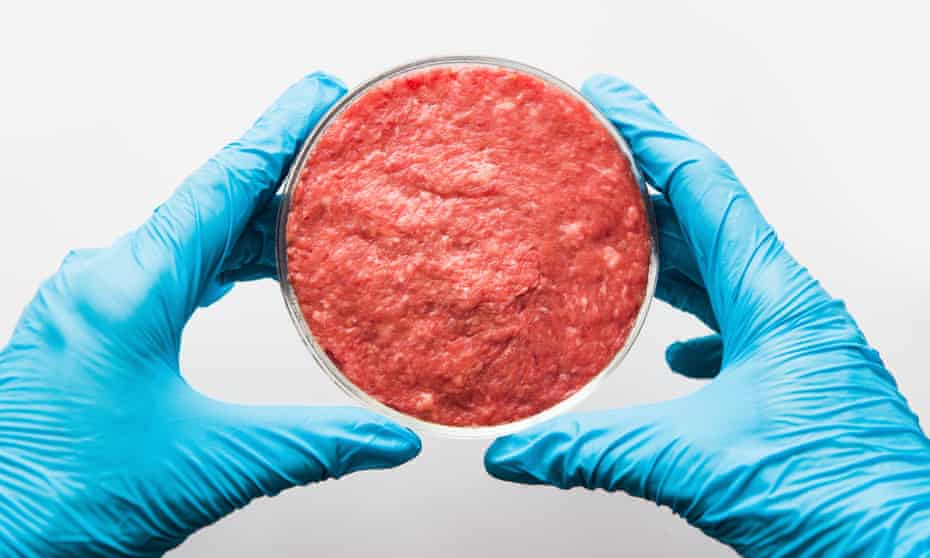
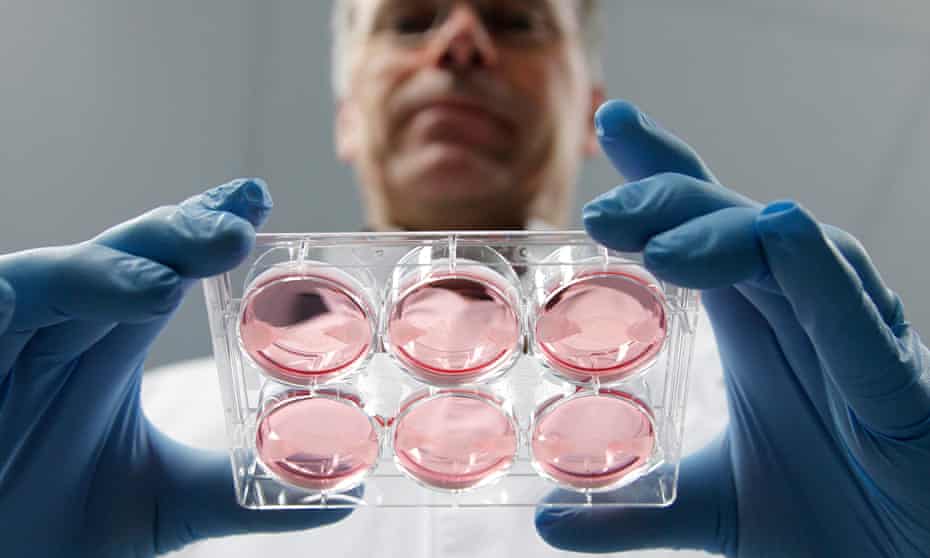
But if chicken nuggets are emblematic of modern capitalism, then they are ripe for disruption. Perhaps their most promising challenger is a radically different sort of meat: edible tissue grown in vitro from animal stem cells, a process called cellular agriculture. The sales pitch for the technology is classic Silicon Valley: unseat an obsolete technology – in this case, animals – and do well by doing good.
Intensive animal agriculture, which produces nuggets and most of the other meat that Americans consume, keeps the price of meat artificially low by operating at huge economies of scale, and shifting the costs of this production on to people, animals and the planet. The industry deforests the land, releases hundreds of millions of tonnes of greenhouse gases every year, creates terrible working conditions at abattoirs, and necessitates abhorrent animal treatment on farms, all while engaging in price fixing, lobbying for environmental and labour deregulation, and pushing for unconstitutional anti-whistleblower laws.
The problem is that people love eating meat, with global production and consumption growing steadily, and little sign of a collective vegan epiphany on the horizon. This makes intensive animal agriculture a wicked problem: something so obviously detrimental, and yet so politically and socially entrenched, that it is unclear where reformers should even start. Cellular agriculture, however, seems to offer a potential socio-technological hack: it could eliminate much of the damage that system causes, without requiring consumers to give up meat.
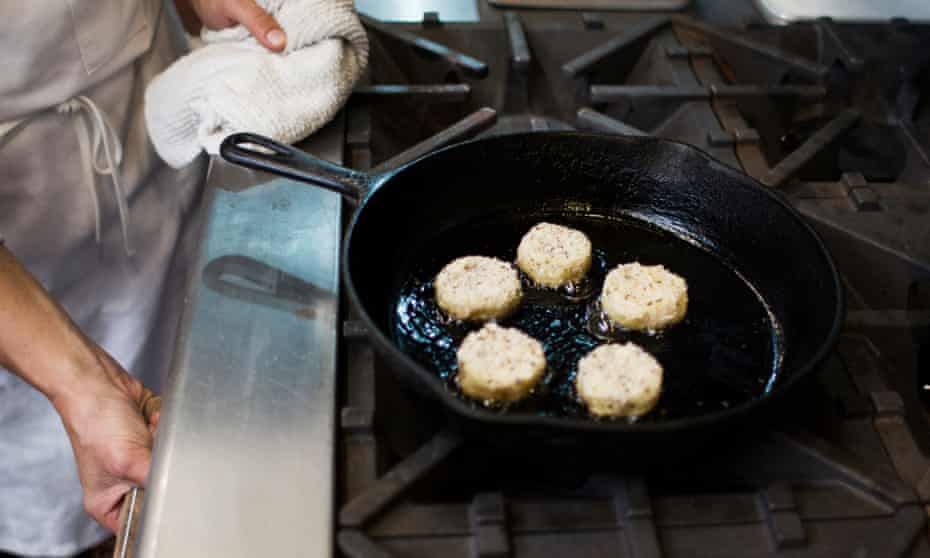
Long the stuff of science fiction and philosophical musing, cellular agriculture is fast becoming a reality. In December 2020, the San Francisco-based food company Eat Just launched the world’s first commercially available cell-based meat at the private 1880 club in Singapore. Its form – a chicken nugget – was partly symbolic, partly necessary: the technology isn’t advanced enough yet to replicate a chicken’s breast, wings or legs. But the entire animal kingdom is ripe for replication. The first cellular agriculture prototype presented to the public was a burger patty created by a research team at Maastricht University in 2013. The company that grew out of that project, Mosa Meat, is now speeding toward market release of cell-based beef. Aleph Farms, an Israeli startup, has 3D printed a cellular ribeye steak. Shiok Meats of Singapore is cultivating shrimp without the shrimp. Berkeley’s Finless Foods is tackling the endangered bluefin tuna. And Australia-based Vow wants to diversify beyond the most commonly eaten species to zebra, yak and kangaroo.
Most of this development is being carried out by a fast-multiplying number of startups clustered in the world’s tech hubs. They are supported by a global network of ultrawealthy investors and venture capitalists who have ploughed more than $7bn into alternative proteins over the past decade, including about $900m into cultured meat. Richard Branson, Bill Gates and a slew of other billionaires are investors and hype men for the technology; the Maastricht burger was funded in part by Google co-founder Sergey Brin. But major corporations are getting in on the ground floor, with the pharmaceutical behemoth Merck investing in Mosa Meats and the meat giant Tyson Foods buying a stake in Silicon Valley’s Upside Foods.
That private capital is working overtime to disrupt farming with synthetic biology is likely all that boosters and critics alike need to know about the technology. Techno-optimists see a future of widely available “clean meat”, as ecologically and ethically superior to the original as solar power is to coal. Opponents see corporate-controlled lab meat that slots all too comfortably into a broken capitalist food system.
Both sides have some truth to them, but they wrongly assume that the outcomes have been determined in advance. There was nothing predestined about the forces that drove the food system to ever-intensifying mechanisation, labour exploitation and environmental ruin in the past century; it happened because of political choices, collective and individual. Similarly, we need not be prisoners of tech monopolists slapping grey “vat meat” on our plates. What we need is an analysis of the possibilities of cellular agriculture – what this novel food technology, with the right policies and investments, could make possible for consumers, workers, animals and the environment.
To grasp the promise and perils of cellular agriculture, we need to understand the system it might change. Our current animal agriculture policies and practices do immense damage, and uprooting them will require enormous collective effort, but history shows that the system can change radically, even in the course of a generation.
For consumers, the current food system is defined by abundance and low prices. Americans spend just under 10% of their disposable income on food, among the lowest rates in the world, and eat a whopping 122kg of meat each a year, including 55kg of chicken. (For comparison, in the UK the numbers are lower but still unsustainable, at about 80kg of meat per person, including 32kg of chicken.) But there’s a high price to pay for low costs. Today, billions of genetically indistinguishable chickens live and die in squalid misery in supersized facilities designed around high efficiency and low margins. Three major processing companies – Tyson, Perdue and Koch – control the majority of the US market for chicken meat. The industry either functions as a quasi-monopsony, with a small number of buyers imposing prices and conditions on producers, or in some cases is vertically integrated so that Big Chicken directly controls most of the value chain.
This gives the industry tremendous economic power over farmers, workers and consumers. Farm owners on contract with major processors are forced to compete so hard against one another that many are lucky if they barely break even. Chicken processing is gruelling, low-paid, dangerous work on high-speed slaughter lines that kill 140 birds a minute. A 2015 Oxfam report on the industry told stories of workers forced to wear nappies on the line because they were denied toilet breaks, and of others crippled by repetitive motion injuries. Meanwhile, chicken giants including Tyson and Pilgrim’s Pride recently settled nine-figure lawsuits for price fixing brought by supermarkets, restaurants and individual consumers. The size and wealth of these companies has also given them remarkable political heft. One of the most potent recent examples of this came in April 2020 when, at the industry’s urging, then-president Donald Trump invoked the Defense Production Act to keep abattoirs open, even as thousands of workers fell ill with Covid-19.
Meanwhile, cramming animals into factory farms and clearing land for more feed crops has increased the likelihood of outbreaks of zoonotic diseases such as swine flu, avian influenza or Covid-19. The system disables and kills even more people through non-infectious diseases: in the past 60 years, changes in diet have contributed to extraordinary increases in the number of Americans with obesity, diabetes and heart conditions.
Two things brought us to this grim place. The first is a profit-led drive for ever-increasing efficiency in agriculture, which has been in train for at least two centuries. The second is the proliferation of agricultural policies that, in the US in particular, have created an endless trough of subsidies, but barely any labour or environmental regulations. The whole system has been engineered primarily for the benefit of the owners of farmland and huge agribusiness firms, and at the expense of the public.
Nowhere is this more visible than in the case of meat. Animal slaughter was industrialised by the meatpackers of late-19th-century Chicago, where 40,000 mostly low-wage Black and immigrant labourers slaughtered millions of cattle and swine every year on so-called “disassembly lines”. This high-volume model required standardised inputs – grain and the animals that ate it – suitable for industrial processing. This was supported by the US government, which early in the 20th century launched research programmes, tax breaks and technology drives designed to facilitate intensive agriculture – to turn every farm into a factory, as the historian Deborah Fitzgerald puts it.
All this led to the advent of factory farms after the second world war. Chickens had not previously been a staple of the American diet, but they proved to be particularly well suited to industrialisation because they reproduce quickly and their size and egg-laying capacity are easily modified through breeding. Meat companies set about creating a market for chicken meat through relentless advertising campaigns, and the factory-farming model soon spread to pigs and influenced the development of ever-larger feedlots for cattle. The environmental health scholar Ellen Silbergeld has described this as the “chickenisation” of agriculture.
There are plenty of smart, progressive critiques of this system, but most of the suggested alternatives involve breaking up the food giants and downsizing or diversifying US farms. But antitrust policy alone won’t address the harms done to animals, labour or the environment by modern animal agriculture. Breaking up big operations could simply generate more, if maybe slightly smaller and slower factory farms. As for genuinely small farms engaged in more holistic agriculture, the theory is that they are more environmentally sustainable, protect jobs and keep local stores stocked with juicy heirloom tomatoes and humanely raised beef. But building an agricultural system around small farmers that is economically viable and can benefit most of the population could be a tall order. Many people don’t want, can’t afford or don’t have access to organic, free-range, farm-to-fork meat and produce. What they can get are nuggets. And proponents of going small often struggle to explain how their ideas can be done on a big enough scale and at a low enough price to challenge the status quo, and in a timeframe that responds to our ongoing ecological crisis.
This is where cellular agriculture comes in. The thing that could help solve the chickenisation of our food system is not pasture-raised hens, but mass-produced chickenless nuggets.
In 1931, Winston Churchill proclaimed that technology would one day allow humans to “escape the absurdity of growing a whole chicken in order to eat the breast or wing by growing these parts separately under a suitable medium”. As recently as the late 90s, the remark could be cited as an example of the futility of futurology. But a rapid development of biotechnology and medical science is making cellular agriculture a reality. Stem cells, the basic building blocks of most organisms, were identified in the 60s. Growing in vitro muscle tissue became possible in the 70s, and the first peer-reviewed research on the possibility of in vitro meat production was published in 2005.
The potential benefits of this technology are manifold. Most analyses of these processes suggest they would use far less land and water, and have a smaller carbon footprint, than beef and dairy. If powered with clean energy – a big but not implausible if – they could have less environmental impact than chicken and pork. It would prevent the torture and killing of billions of creatures every year, and also greatly reduce the risk of diseases spreading from animals to humans. Cellular fish could have even greater ecological benefits, through relieving pressure on endangered ecosystems and reducing the extensive pollution caused by the fishing industry.
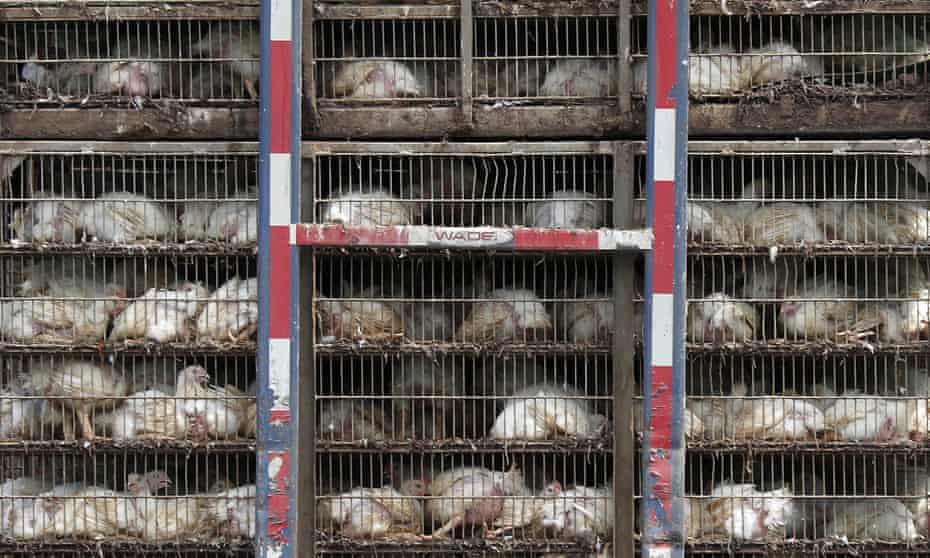
Rendering abattoirs obsolete would also end their inherently abusive labour practices. The labour required to culture meat is highly technical and involves carefully monitoring, maintaining and adjusting bioreactors without compromising the fragile aseptic environments that cell growth requires. That’s the polar opposite of fast-paced slaughter and dismemberment labour, which results in, on average, two amputations of hands, fingers, feet or limbs a week in the US. Cellular agriculture factories would offer substantially better-paying jobs than abattoirs, and would also be considerably safer and healthier work environments (albeit likely not to the same workforce).
This vision of cellular agriculture seems like just the sort of boosterism that Silicon Valley loves to inspire and exploit. To a growing number of critics, the enterprise smacks of “solutionism”, the foolhardy belief that technology can sidestep thorny social and political problems. For some scholars of technology, cellular agriculture is yet another exercise in “ecomodernist techno-optimism”. They argue that it is blind to the fact that “actual modernisation has entailed very real, and sometimes violent, effects for people and societies to be modernised”, as the Uppsala University geographer Erik Jönsson put it. Many would prefer if everyone simply went vegan or vegetarian.
There are valid concerns that Silicon Valley and food corporations could use technologies such as cellular agriculture to tighten their control over the food supply and greenwash noxious agricultural capitalism. Current meat culturing techniques and stem cell lines are valuable intellectual property, closely guarded by armies of patent lawyers and non-disclosure agreements. Critics worry that this new industry will replicate precisely the opacity and lack of accountability of the one it aims to replace. To them, cellular agriculture embraces the worst parts of the current food regime: mass-produced, nutritionally dubious nuggets sold at homogeneous fast-food joints.
There are three responses to these challenges. The first is that the potential benefits of cellular agriculture outweigh all these costs. If the technology can dramatically diminish the production and consumption of conventional meat, even if it does so using the tools of financialised, neoliberal agri-capitalism, this is still ethically and ecologically preferable to the status quo. Incumbent meat companies such as Tyson and Cargill are not, after all, philanthropic enterprises feeding the world out of the goodness of their hearts, either. Put differently, to suggest that a world of cell meat and one of factory farms are remotely comparable is to lose all sense of perspective on the food system.
Finally, there’s nothing inherent to cellular agriculture technology that favours venture capital or restrictive intellectual property regimes. Those who want cellular agriculture to live up to its lofty potential shouldn’t just be worried about the malignant influence of capital – they should be finding practical ways to limit it. What’s needed is the political vision and energy to liberate this technology from the grips of corporate stakeholders, and to use it for the radical project of improving the human and animal condition around the world.
But if cellular agriculture is going to improve on the system it is displacing, then the critics are right: it needs to grow in a way that doesn’t externalise the real costs of production on to workers, consumers and the environment. There are serious questions about whether production can scale up safely and affordably, and some cellular agriculture practices need to be cast aside. For instance, many companies’ current production techniques, including the ones Eat Just used for its Singaporean nuggets, use foetal bovine serum as a cell growth medium, which is harvested from the blood of cow foetuses during slaughter.
But scale may be as much a social and political question as a purely technical one. While some cellular agriculture research is being carried out at public universities with support from NGOs such as GFI and New Harvest, most research and development is being done privately. Substantial capital is needed for research, development and commercialisation. But the fact that the private sector sees potential in a technology that governments have mostly ignored is a political problem. What we need are public institutions that can nurture cellular agriculture and rein it in with public investment, regulation and licensing. It is perfectly plausible that private firms flush with venture capital will find ways to scale and sharply reduce the costs of cultured meat. But they will almost inevitably do so while maximising investor value rather than social welfare.
The challenges to achieving scale and affordability are substantial. An independent analysis for Open Philanthropy estimated that to be commercially viable, cultured wet mass would need to sell at about $25 per kg. Current culturing techniques could put it at about $37 per kg. This creates a paradox. Cultured meat at its current level of development is best suited to replace the most mass-produced, standardised, readily available meat: the chicken nugget. But the Eat Just nuggets were $17 a plate, a price that would flop on the mass market, and may already have been significantly discounted for promotional purposes. Chicken nuggets are far cheaper than $25 per kg, which is closer to what you might pay for free-range beef.
Perhaps the best way to overcome these challenges is to deploy the same strategy that the US government used to industrialise farming a century ago: invest robustly in research and development through public universities, national labs and generous subsidies. Between talk of the Green New Deal and the Biden administration’s ambitions for comprehensive climate crisis policy, the window for public investment in environmentally responsible technology is unusually wide. Substantial and continued government investment in cellular agriculture could be a part of whatever legislation emerges. More broadly, governments should learn from economists such as Mariana Mazzucato, who argue that mission-driven public investment in innovation is crucial to serving the public good. We are already seeing some of this sort of proactive investment and regulation in places such as Singapore and Israel.
Most critical visions of cellular agriculture are dystopian: unaccountable corporate giants force-feeding a captive population with fake meat. Ironically, that describes the food system we already have. A world in which the factory-farmed nugget is replaced by the bioreactor-brewed nugget would be a monumental win for animals and the environment. If tied to progressive industrial and agricultural policy, it could also be a win for labour, public investment, land use and champions of sustainable agriculture. No, this would not be a one-shot, magic bullet solution to the many ills of food production; there is no panacea. But it’s a start. Chicken nuggets might represent everything that’s wrong with our current food system, but cellular nuggets might just help build a more sustainable future.
A version of this article first appeared in Logic, a magazine about technology.

Modern Love in miniature, featuring reader-submitted stories of no more than 100 words.

In December 2020, my boyfriend and I hiked Kranzhorn, a mountain that divides Austria and Germany. As we climbed, the snow drifts thickened. We were surprised to see a fit middle-aged man bike past us alone. When we reached the summit, we saw him again — this time, with a woman. On our way down, the biker, now alone, passed us one more time. We asked about the woman. He lived on the German side of the border and she on the Austrian. Even in the strictest of times, they had found a way to meet. — Valerie Levine

Both photographers in Birmingham, Ala., Anna and I recognized each other at our children’s ballet lessons. While our little ones learned how to hold first position, we learned how to hold space for one another. I shared my struggles with binge eating and gastric sleeve surgery. Anna shared her marriage troubles. “We’re getting a divorce,” she said one day. “I’m gay.” Anna came out as a teenager only to retreat years later. To be accepted, she had conformed to a heterosexual life. But at 29, my dear friend found the only acceptance she ever needed — her own. — Alisha Crossley

The Bible says to “love thy neighbor,” but I took that advice too far, dating a man from down the street before we mutually ghosted each other. (During a Canadian winter, we mistakenly prized the convenience of proximity over compatibility.) Now, almost every time I get gas at our local station, I look up and see my ghost pumping gas across from me. The first time we saw each other, we nodded for pretense’s sake; now, we awkwardly look the other way. Readers, heed my warning: Don’t date people in your neighborhood, or you’re bound to get haunted. — Cassie Silva

My boyfriend volunteered to watch my family’s farm. My family and I would be away for 10 days without cell service. Grant would be responsible for the summer garden crops, chickens, kittens, newborn lambs who needed bottle-feeding, a dog that needed medicine and a ewe about to give birth. We came home to find Grant, exhausted, with livestock books on the table. “I was out with the sheep all night,” he said. “I was worried she’d have the lambs.” A city boy who stayed up all night waiting on new life. Our life together began then. — Laurel Harrison

Breakout: When the price breaks a support or resistance level that it has tested before and moves above or below that level. Re-...


