Friday, 24 October 2025

Easy method to determine next target based on candle close


By David Perk aka Dave Fx Hunter, 9 hrs ago
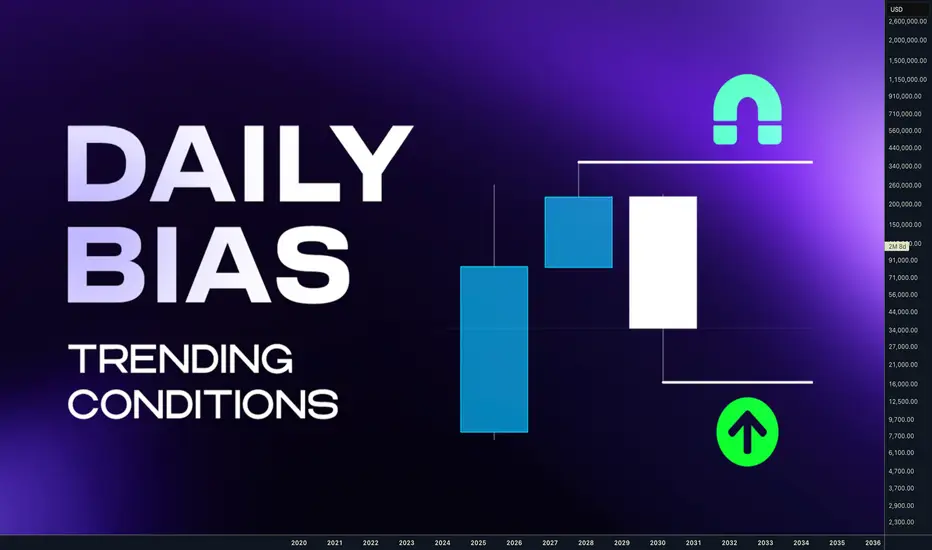
Hey traders today we are going to look in how to determine Daily Bias. Its actually not that complicated how many people thinks.

Please forget about higher highs, and higher lows, channels and moving averages. Yes these can be also used, but we will be looking at the market in terms where is the liquidity and we will be determining the bias based on candle closes which tell us where the liquidity is resting.

We will look at the Daily bias, but as I mentioned this many times in my posts - price is fractal so you can use this at any timeframe. But, If I can give you recommendations look for Higher timeframe bias on Daily and Weekly and H4 / H1 Structure and M15 entries.

This post will be about continuation setups in a trend, I will touch a bit reversal because it's part of setup on LTF in the continuation. Something will be shown on bearish examples something bullish I hope you can use imagination for both sides.

⁉️Where is the liquidity ? Always follow the Daily / Weekly candle close.

πŸ“ˆ Continuation
If todays daily candle closed above previous days high and its still not reaching the key level, then liquidity is above todays high. Why ? Because people have intentions to sell highs to early, so and price will most likely go there. So we are bullish. Bullish ClosesnapshotπŸ“ˆ Reversal
If todays candle wicked above previous day high, but closed below , then we can expect liquidity is below Previous days low. Why? Because mostl likely traders entered fake high break out they put SL below days low. It's signs of reversal.snapshotEvery significant reversal wicked above PDH and closed inside, if not seen on PDH than its on weekly.snapshot‼️ Yes, Its that simple - this is how I predict my bias for the setups.
There is obviously little bit more regarding the market context, because I want to be always selling highs and buying lows. Hence there must but pullback deep enough. I have explained how to buy low and sell highs in this post below. πŸ”—Click the picture to learn more πŸ‘‡This is not about catching every significant highs and lows, you don't need it to be profitable. We are looking for the high probability trend continuation setups. We can catch highs and lows in the trend. After the stop hunt.

πŸ§ͺIn downtrend you want sell after stop hunt of short term highssnapshotπŸ§ͺIn the uptrend you want be buying after stop hunts of short term lowssnapshotI have explained more about stop hunts in this post. πŸ”—Click the picture to learn more πŸ‘‡Now, If we know the bias based on the Daily / Weekly candle close our goal is to position ourself in the right time for the continuation setup which will be during the lower timeframe reversal.

πŸ“ŒReversal Setup
first lets have a look to the reversal. We want see a candle high being taken and closed below. In that case draw on liquidity is below the daily low. Sign of reversal. So we can position ourselves in a tradesnapshotas described on the picture, wick above and close inside is not enough for the signifcant HTF reversal. But its enough for our continuation setup,

πŸ“ŒContinuation setup
We want to see bullish candle close above previous days high and not liquidity taken above that wick. Then we can assume that liquidity is still resting above and we want to position ourselves during the LTF reversal in the direction of the HTF liquidity.snapshotsame case will be for this bearish example where we can see how candles closed below the previous days low and last low was not swept hence we can expect price to visit that low again, we have spotted potential reversal by wicking above the candles high and close below and than we can position ourselves to the short and target daily lows.snapshotπŸ“Œ Continuation LTF reversal timing
same case now you must already see it bullish close above PDH and that high was not swept so liquidity is still above , next day is inside candle once price dips below inside candle low we cans spot reversal setup on LTF and by creation of order block we enter the position during the NY session manipulationsnapshotπŸ“Œ No Stop hunt = No trade
if liquidity was not taken don't enter. Yes you can miss a trade it doesnt happen always, but if it doesnt happen it's not your setup so you didnt miss anything. On this example you can see that we had almost same setup. Bullish daily candle close. High was not swept, and than 2 inside candles. 3 candle manipulated lows and another candle was expansion.snapshotNow still focus the the picture above 2nd candle that candle is a range you are entering it after that range was manipulated. Look how price reached 50% of that range , retraced and than it went full range. Its Trading model 1 and Model 2. You mostly get 2 chances to trade it.snapshotTrading ranges is in my opinion least subjective approach and unlike diagonal drawings or multiple various pattern it has defined rules. I have described this strategy in details in this post below. πŸ”— Click the picture to learn more πŸ‘‡πŸ“Œ Final example for today - Schematics
Now try it alone - step by step
1) How are candles closing
2) Was the Liquidity on the low taken ? No - price might go there - Im bearish
3) Lets wait for the LTF reversal - bearishsnapshotthis scheme was actually traded and posted here on Tradingview as a Continuation setup Model 1 & 2 πŸ”— Click picture below to learn how price action developedπŸ‘‡πŸ’Š Here are few more examples based on this trading logic

1️⃣GBPUSD Daily range - Continuation setup Model 1 & 2
πŸ”— Click picture below to learn how price action developed πŸ‘‡2️⃣AUDUSD Daily range - Continuation setup Model 1 & 2
πŸ”— Click picture below to learn how price action developed πŸ‘‡3️⃣DOGE Daily range - Continuation setup Model 1 & 2
πŸ”— Click picture below to learn how price action developed πŸ‘‡Final words
Is this holy grail ? Almost.
Why is this approach great ? It's mechanical system for analysis - No subjective guessing.
Does it prevent me from losses ? No, I can make and I sometimes I do mistakes in analysis, Im not perfect.

Dont trust me , Im just a guy from the internet. Verify it by yourself and see if you take some of it to your trading arsenal.

Adapt useful, Reject useless and something specifically your own.


David Perk aka Dave Fx Hunter

Economic Calendar OverviewπŸ‘€ (Mon 20 Oct - Fri 24 Oct)

Economic Calendar OverviewπŸ‘€ (Mon 20 Oct - Fri 24 Oct)

Sunday, 19 October 2025

How to trade a Fakeout step-by-step


This chart shows a common trading strategy in financial markets (such as Forex or equities): identifying a fakeout and profiting from it. A fakeout is when it appears price has broken a support or resistance level, then suddenly reverses and moves the other way, catching traders who entered on the breakout.


---

1. Clean bullish move

At the start of the chart we see a series of green candles indicating a strong, steady upward move.

This move builds market confidence and serves as an initial sign of bullish strength.


2. Support & resistance

Support: a price level expected to stop declines and cause a rebound. In the chart it’s the lower horizontal line.

Resistance: a price level expected to halt advances and cause a decline. In the chart it’s the upper horizontal line.

These zones represent important psychological and technical levels for traders.


3. The breakout

After the bullish move we see a large green candle breaking above the resistance line. This is called a breakout.

Under normal conditions, a breakout above resistance is a strong buy signal, as continued upside is expected.


4. The fakeout

Here’s the crucial part: after the breakout, instead of continuing higher, price suddenly begins to fall.

That is the fakeout — traders who bought the breakout are deceived because price returns downward.

The chart shows this with a red downward arrow labeled “FAKE OUT”.


5. Liquidity area

The pink shaded area above the resistance line is the liquidity zone.

In market analysis, a liquidity zone is where traders leave orders (such as stop losses or take-profits). When price moves into this zone it can “collect” those orders and then reverse.

In many fakeouts, price targets this area to gather liquidity before reversing down.


6. Price returns to the area

After the fakeout, price returns to the support or the previously broken resistance.

This return confirms that the breakout was false rather than real.


7. Entry areas

Risky entry area: near the peak of the fakeout. Entry here is risky because price may remain unstable and continue to move against you.

Safe entry area: on the return to the former support (or previous resistance). Entering here is safer because you’re waiting for confirmation of the reversal.


8. Clean bearish move

After entering safely near the support, we see a series of red candles indicating a strong, steady downward move.

The goal of the fakeout strategy is to enter the confirmed reversal and capture this clean bearish move.


---

Strategy summary

1. Watch the bullish move and the resistance level.


2. Wait for a breakout above resistance.


3. Observe whether price continues up or returns down (fakeout).


4. If a fakeout occurs, wait for price to return to the support area.


5. Enter a short at the safe entry area.


6. Target the clean bearish move for profit.


This strategy requires patience and careful monitoring to avoid falling into market traps.

PULLBACK AFTER BREAKOUT ENTRY


"PULLBACK AFTER BREAKOUT ENTRY"

(Entry After a Pullback Following a Breakout)


---

🎯 General Concept

This chart illustrates a common trading strategy used in Forex, stocks, and crypto. It is based on the following steps:

1. Breakout above a Resistance level.


2. Wait for a temporary Pullback after the breakout.


3. Enter the trade when price returns to the Demand Zone, which was previously a Resistance area.


4. Place a Stop Loss below the safe area.


5. Set an Initial Target for taking profit.


---

πŸ” Detailed Breakdown of the Chart Elements

1. RESISTANCE

A horizontal grey line representing a previous resistance level where the price reacted multiple times.

When price breaks this level, it turns into future support (Support becomes Resistance, and vice versa).


---

2. BREAKOUT

Occurs when the price moves above the resistance level and begins to rise.

In the chart: a strong green candle breaks above the grey line → this is the Breakout moment.


---

3. PULLBACK

After breaking out, the price does not always continue moving up directly — it often pulls back slightly.

This is a retest of the previous resistance.


> ✅ Why wait for a pullback?
It reduces the risk of entering at the top and improves the Risk/Reward Ratio.


---

4. DEMAND ZONE

The zone where buying pressure (demand) is strong, acting as support.

In the chart: a grey rectangle below the resistance line — this is where price is expected to react.

Entry is planned when price bounces back from this zone.


---

5. ENTRY

Enter the trade after confirming a bullish reaction from the Demand Zone — such as a bullish candle or reversal pattern.

In the chart: the entry is marked with a blue circle after the red pullback candle rejects the zone.


---

6. STOP LOSS AREA

Placed below the Demand Zone.

If the price goes below this area, it indicates the breakout–pullback setup has failed.

In the chart: a red line marks this Stop Loss level.


---

7. INITIAL TARGET

A predefined price level to take profit.

In the chart: shown with a dashed green line above the price.

It can be set using Risk/Reward ratio like 1:2 or 1:3, or based on previous highs or Fibonacci levels.


---

πŸ“ˆ Practical Example (Upper Chart)

The price was ranging between support and resistance → then broke above resistance (Breakout).

Price pulled back to retest the level — forming a Demand Zone.

Entry was taken after rejection.

Stop Loss placed below the zone.

Target placed above for profit.


---

πŸ“‰ Lower Illustrative Chart

Shows the same idea in a simplified linear drawing.

Highlights Breakout → Retest → Continuation.

Confirms that entry on retest is safer and more effective.


---

πŸ’‘ Important Tips When Applying This Strategy

✅ Wait for confirmation — don’t enter just because price touched the zone.
✅ Use proper lot sizing — never risk all capital in

Thursday, 16 October 2025

Avoid Market Traps and filter best trading setups


Avoid Market Traps and filter best trading setups.

By David Perk aka DaveFXHunter
Hey whats up guys,
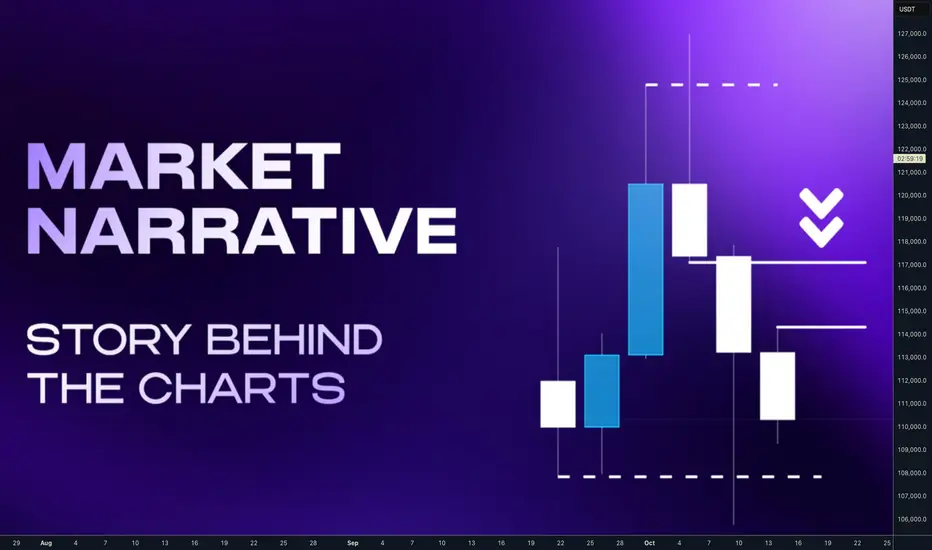
Let's have a look to the market narrative and building the potential scenarios of next outcome. It's not about predicting the market, but I would say rather about filtering out next potential outcomes of price action based on fixed criteria and price action laws.

πŸ“ŒBasic Market Phases
snapshotBut if that is so simple what is not everyone making money?

πŸ“ŒIts not that straight forward and every transition from range to expansion comes with manipulation's and false break outs.
snapshotto understand market dynamics we need to understand how the smart money operator works.

πŸ“ŒSmart Money CLS company
This one institution trade over 6.5 Trillions daily volume on forex. Which is almost all the volume, they are Smart money trader and they trading for most of the central banks and investment banks.snapshotSo these smaller players instead of trading against each other they make settlements via CLS and CLS finds the liquidity on the markets. How I know ? It's on their website. Just google it Now you know where comes my name for CLS Ranges. It's basically big range, high volume candles made by market maker which is CLS. Hence CLS range or range, name doesn't matter really.

πŸ§ͺSmart money trader cant just simply press Buy or Sell Button like we do. If they do it, they will move the price without getting a fill at requested price for the all their orders the y need. In other words they will not have liquidity for their large operations. Hence they must follow specific framework to create liquidity and then load it.

🧩For understanding more about a Liquidity visit the post below.
πŸ”—Click to the picture to open learn more πŸ‘‡πŸ“ŒAccumulation - Manipulation - Distribution
it is what help them to get liquidity. Its also called stop hunt, but they really dont care about your or mine stop loss. We are to small and mostly our brokers are B-book anyway.

Let's say they need to fill 1000 contracts (example number) futures contracts on the 6E1 Euro contract. But they can get just 600 at the current market, hence they need to accumulate in the range as much as they can. The rest they will buy bellow / above the range.

πŸ§ͺBullish scenario AMD
Accumulating contracts in the range happening above the key level. False break up, will suck other market participants to the market and they will have liquidations bellow the range, thats is new liquidity created below the range. By hedging the positions, they manipulate price below the range to get the rest of contracts need by forcing early buyers to sell for the worse price. Then they close the hedge shorts in a profit and they start to move price up.snapshotIf price is in the range you can spot it accumulation by seeing high volume on the lows.

❎ Action of less informed traders - bought early - stopped out, Sold the break of the low - wrong side of the trade. These traders were used as a liquidity.snapshotπŸ§ͺBearish scenario AMD
Accumulating contracts in the range happening below the key level. False break down, will suck other market participants to the market and they will have liquidations above the range, thats is new liquidity created below the range. By hedging the positions, they manipulate price above the range to get the rest of contracts need by forcing early buyers to buy for the worse price. Then they close the hedge longs in a profit and they start to move price downsnapshotIf price is in the range you can spot it accumulation by seeing high volume on the highs.

Action of less informed traders - sold early - stopped out, Both the break of the top - wrong side of the trade. These traders were used as liquidity.snapshotπŸ“ŒHow to avoid being caught in these traps?we need to focus on the basics which is buying lows and selling highs and not to fomo to the running market moves. Im not saying you cant be profitable with break out strategies. But with buying lows in uptrend and selling highs in downtrend is better idea.

🧩How to do Buy low / Sell highs is explained this post below. πŸ”—Click to the picture to open lean more πŸ‘‡from the post above you understand market structure.
each phase of the structure has specific market dynamics. We don't want to trade every up and down move. Just expansions are giving best risk rewards. and vice versa for bearish scenario.snapshotπŸ“ŒHow to know if there will be manipulation or not?
everything comes from the key level. Any pattern whatever we trade if there is no key level than its all invalid. Lets put the ranges and key levels together.

πŸ§ͺBullish Scenario
if you see range just above the key level. Smart money are building liqudity and there will be manipulation. If price is already on key level deep manipulation is not necessary.snapshotπŸ§ͺ Bearish Scenario
if you see range just below the key level. Smart money are building liqudity and there will be manipulation. If price is already on key level deep manipulation is not necessary.snapshot
πŸ“ŒExpansion + Key Level
if range occurs not just right above the key level but is a bit more far, we can expect expansion to reversal profile. Expansion to the key level is tradable and reversal also if there was range. This. knowledge give us possible expansion trade towards key level.

πŸ§ͺBearish scenariosnapshotπŸ§ͺBullish scenariosnapshotthere are also tricks with false reversal just below / above key level, market maker often leave double top and bottom , just round a key level and make it looks like ar reversal. Dont fall for this trap. Its done on purpose to put you early in to trade and you will put SL exactly where you they need liquify - followed by expansion to the key level and reveal. Targeting double top / bottom is high probability trade.

πŸ§ͺBearish ScenariosnapshotπŸ§ͺBullish ScenariosnapshotπŸ“ŒSummary of Key Level and Profiles
Avoid trading range , manipulation and retracements
Trade only expansion and Reversal profiles
snapshotThis might sound complicated, but if you spend time with this. You will be filtering just best trade setups , trading less and more accurately.

David Perk aka DaveFXHunter

How to use Session Profiles for Day Trading


How to use Session Profiles for Day Trading


By David Perk aka Dave FX Hunter ⚔️
Jul 8
Hey whats up traders, in reveal cheat code for day trading by using session profiles. It's powerful concept. If correctly applied with HTF trend it will allows you to join running train path the right time.

Dont forget to follow me. I release such articles every Monday.

🧠 What Are Session Profiles?

A session profile describes the typical price structure and narrative during a market session — from open → high/low → close.

In Forex, we focus on:
• Asian Session
• London Session
• New York Session

Each session can act as either a reversal or continuation of the previous session(s).

πŸ“ˆ Why They Work

Markets are engineered to:
• Run stops (above highs or below lows)
• Fill inefficiencies (fair value gaps or imbalances)

CLS prefer to move price during specific times — the active hours around session opens. This is where liquidity is high and slippage is minimal, making it ideal for executing large orders.

So, session profiles help us map out when and where these manipulations are most likely to happen.

✅ Why You Should Use Them

Session profiles help you:
• Avoid low-probability trades in dead sessions
• Focus on high-probability narratives
• Anchor your execution models to context

But remember: they are not an entry model. You still need:
• A higher timeframe bias
• A mechanical entry model
• A system for risk and trade management

πŸ” How to Use Session Profiles

Use the previous session(s) to anticipate the next one.
• For London session → analyze the Asian session
• For New York session → analyze Asian + London sessions

You’re looking for:
1. Manipulations into key levels
2. Displacement (price moves away strongly)
3. Change in order flow (e.g. OB,on M5 ,15 or H1)
4. Remaining liquidity targets (draw on liquidity)

πŸ“Š Session Profile Types with Chart Logic

1. πŸ”„ London Continuation Profile

Conditions:
• Asia session already made a manipulation into a key level
• Price displaced away from that level
• CIOD / OB on M15 or H1 before London open

Example:
• H1: Asia runs stops above H1 high into a fair value gap (key level)
• Displacement confirms intent
• At London open, price retraces into M15 premium (PD array) and continues in the same direction

Invalidation: the manipulation high/low from Asia session
Narrative: Asia did the manipulation → London does the continuation.

snapshot

2. πŸ” London Reversal Profile

Conditions:
• Asia session consolidates near a higher timeframe key level
• London open initiates the manipulation into the key level
• Displacement + M15 BOS after manipulation

Example:
• H1: Asia consolidates under daily FVG
• London opens, price runs Asia high into that FVG
• M15 breaks down → clean short setup
• Target: higher timeframe draw on liquidity (e.g., previous day low)

Invalidation: the London session high (manipulation point)
Narrative: London performs the manipulation → price reverses.

snapshot

3. πŸ”„ New York Continuation Profile

Conditions:
• Asia + London already created a clear manipulation and displacement
• London has not reached the final draw on liquidity
• London is not overextended (e.g., <70 pips move)
• New York opens with structure intact for continuation

Example:
• H1: London makes a reversal from a key level and displaces lower
• Draw on liquidity (e.g., previous day low) still untouched
• NY opens and continues the sell-off, retracing briefly into M15 imbalance before expanding lower

Invalidation: manipulation level from London
Narrative: London set the direction → NY finishes the move.

snapshot


4. πŸ” New York Reversal Profile

Conditions:
• No clear London profile (no key level touched, no strong CHoCH)
• NY opens and manipulates into a key level (e.g., daily OB, FVG)
• Clear M15 or H1 CHoCH or BOS confirming reversal
• Asia + London lows still intact (liquidity available below)

Example:
• H1: No strong setup in London
• NY opens, price spikes into daily OB and takes out London highs
• M15 structure shifts → sell targeting London + Asia lows

Invalidation: NY session manipulation high
Narrative: London was noise → NY takes control and reverses.

snapshot


πŸ” Visual Structure Flow

Before applying any session profile, confirm:
1. High-probability trading conditions (e.g., key level proximity, market open, liquidity available, Red News)
2. Bias in place (HTF (D1 and Weekly direction must be known)

Then:
→ Check for valid session narrative
→ Select the correct session profile
→ Wait for the stop run of H1 / H4
→ Is there enough room for the move to key level
→ If we are still in first half of session you can enter. If its close the end of session skip it.
→ Apply your entry and risk model.
→ Dont be greedy look for 2:1 RR trade and get out.

πŸ” [I]How to enter ?
if bearish - You always want enter above H1 I H4 candle after LTF CIOD
If bullish - You always want to enter bellow H1/ H4 after LTF CIOD.

Use Order block to enter the market here is how to

True Breakout and a Fake out

🎯 Introduction

In technical analysis, breaking through a resistance or support level is considered a key signal for either trend continuation or reversal. However, not all breakouts are genuine. The illustration highlights the essential difference between a True Breakout and a Fakeout.


---

✅ 1. True Breakout

πŸ” What is it?

A True Breakout is a strong and decisive price movement where the price breaks a resistance or support level with confirmation, and continues moving in the direction of the breakout without quickly returning back.

✨ Characteristics (as shown in the chart):

Price Action: After touching the resistance (or support), the price breaks through with a clear closing candle above it (for resistance) or below it (for support).

Post-Breakout Behavior: The price does not return to the previous range. Instead, the old resistance becomes new support (or support becomes new resistance), and the price continues trending upward or downward.


πŸ’‘ Example:

If the price is moving in a sideways range and suddenly breaks the upper resistance with strong momentum and high trading volume, closing clearly above it and not pulling back immediately, this is considered a True Breakout, signaling the beginning of a bullish trend.


---

⚠️ 2. Fakeout (False Breakout)

πŸ” What is it?

A Fakeout is a deceptive price move where the price seems to break a resistance or support level briefly but fails to hold above/below it, and quickly returns back, continuing in the original direction or reversing strongly.

✨ Characteristics (as shown in the chart):

Price Action: The price slightly breaks the resistance/support, often through a wick or a small candle body.

Post-Breakout Behavior: The price does not continue in the breakout direction. Instead, it quickly reverses back, trapping traders who entered based on the breakout.

This is often used by Smart Money or liquidity hunters to trigger stop losses and grab liquidity before moving the price in the opposite direction.


πŸ’‘ Example:

The price breaks a key resistance, attracting buyers to enter long trades. However, the price lacks momentum, quickly drops back below resistance, causing losses to trapped buyers. This is a Fakeout trap.


---

🎯 How to Differentiate Between a True Breakout and a Fakeout

Factor ✅ True Breakout ❌ Fakeout

Volume High volume confirms strength Low or weak volume indicates lack of conviction
Closing Candle Candle closes firmly above/below the level Price only pierces the level without strong closing
Retest Behavior Old resistance becomes new support (or vice versa) and holds Price fails to respect the level and moves back easily
Momentum Indicators (RSI, MACD, etc.) Indicators support the move (healthy momentum) Indicators show weakness or overbought/oversold conditions


---

πŸŽ“ Summary

True Breakout: Strong movement, high volume, confirmed candle close, and continuation.

Fakeout: Weak movement, low volume, temporary break, followed by reversal and liquidity trap.


Understanding this difference is crucial for risk management and avoiding false signals that lead to losing trades.

Sunday, 12 October 2025

🧠 MrF2Rev Trading Mindset Code

🧠 MrF2Rev Trading Mindset Code

1. One Setup. Infinite Opportunities.
I don’t need 100 strategies — I just need one that works over and over.
The Failed2 is my language, my edge, my freedom.

2. Respect the Stop.
Stop loss goes at 50% of the previous Failed2 candle — not where I feel safe, where the data says I’m protected.
If it hits, I reset — not revenge trade.

3. Take Base Hits.
I’m not chasing home runs — I’m compounding discipline.
Consistency builds accounts. Ego destroys them.

4. Trade With the Chart, Not My Heart.
I’m not here to predict, I’m here to react.
The candle tells me the story — I just listen and execute.

5. The Market Owes Me Nothing.
Every trade starts fresh. No bias, no baggage.
My only mission: read the structure, spot the trap, strike when it’s right.

6. FTFC is My Compass.
Full Time Frame Continuity tells me the direction of power.
If I go against it, it’s because I’m at exhaustion — and I accept the risk fully.

7. I Don’t Chase Moves, I Create Patience.
If the setup didn’t come to me, it wasn’t mine.
I’m okay missing trades — I’m not okay forcing them
#thestrat #Failed2Gang

M and W patterns for entry Study

M and W patterns for entry 
Study

How I trade Breakouts at All Time High resistance levels

How I trade Breakouts at All Time High resistance levels:

Since I can't visibly see the next resistance level to take profit, there are 2 main approaches I take ↓

-----------------

Option 1: Hold the position indefinitely until a change in market conditions

• (e.g. the market structure breaks in the opposite direction, or the price action just starts stalling, or the price action suddenly starts behaving very differently and looks very different compared to what it was just recently doing).

• I will only take this approach if the quality of the Breakout Trade is HIGH before entering. (noticeable "staircase" price action coming into the level + very large and consistent increase in the average volume as price is getting closer to the breakout level)

-----------------

Option 2: Exit at psychological level where a lot of limit sells are stacked

• this one is the easiest in terms of effort/skill required. If I'm doubting the quality of the trade I'll just take this approach to play it safe.

• just look at the orderbook, find the next big psychological level and frontrun it with your TP.

• you can be confident that the order is not spoofed since most people really do stack limit orders at psych levels.

• if a random huge limit sell is sitting at a random obscure price, these ones are more likely to be spoofs so don't rely on these too much.

-----------------

All time high levels often have a lot of action near them and often give either the biggest breakouts or the biggest reversals.

It's a good idea to have some kind of gameplan in place to trade them.

🌢️

1 Hint to know if your Trading Strategy is Broken

1 Hint to know if your Trading Strategy is Broken:

A little unfiltered rant ↓

-------------------------
"if equity curve falls below X, then assume that something is wrong with the strategy".

There's no perfect way to define X

But X should be an abnormally high amount of drawdown relative to the strength of the strategy that you are using.

Let's use the following "extreme example"
• If the average expected drawdown of your strategy over 300~ trades is -25% and you're down -37% by trade #30, something might be off.

The greater the distance that your equity curve falls below X , the greater the likelihood that the strategy was not profitable in the first place and perhaps previous backtests that were done on it were overfit.

Economic Calendar OverviewπŸ‘€ (Mon 06 Oct - Fri 10 Oct)

Economic Calendar OverviewπŸ‘€ (Mon 06 Oct - Fri 10 Oct)

Looking at Volume makes trading Breakouts easier

Free Alpha

Looking at Volume makes trading Breakouts easier.

The chance that price breaks a level instead of bounces from it goes UP if the volume is consistently increasing over time.

Visualized↓

If you’re new to The Strat, don’t stress about learning every combo right away

If you’re new to The Strat, don’t stress about learning every combo right away. πŸ“Š

Start simple — grab my eBook and learn how to identify a Failed 2 setup. Mastering one setup and sticking to it is one of the smartest ways to build consistency. You don’t need to know every Strat combo to be profitable — sometimes being a one-trick pony is all it takes. πŸ‘‡

LONG-LEGGED DOJI FALL STRATEGY πŸ•―️


πŸ—―️ WHAT IS A LONG-LEGGED DOJI?

Small body + long wicks = Indecision and power struggle.
When seen in a downtrend, the probability of sellers gaining control increases.


---

πŸ’­ WHAT DOES THE PSYCHOLOGY BEHIND IT SAY?

Although buyers try to recover, selling pressure dominates.
The trend may continue or a downward breakout may occur.


---

πŸ‘€ HOW TO TRADE IT?

Entry: Open a SHORT position when the price breaks below the low of the candle.

Stop Loss: Place it at the highest point of the candlestick formation.

Profit Target: Close at the nearest support level or based on your risk/reward ratio.


---

🧩 EXAMPLE STRATEGY: BTC/USDT

A Long-Legged Doji formed on the 15-minute chart.

Price moved below the low of the candle → SHORT position opened.

Stop loss was placed at the high of the candlestick.

Target was set at the nearest support zone.


---

♟️ WHY IS IT IMPORTANT?

If this formation appears especially after a bullish move, it may signal a trend reversal.
With disciplined risk management, it enables profitable short trades.


---

🎯 CONCLUSION

The Long-Legged Doji is a warning that selling pressure might strengthen.
When used correctly, it can help you profit from downward trends.


---

#AKBNK #ARCLK #ASELS #BIMAS #EKGYO #ENKAI #EREGL #FROTO #GARAN #HEKTS #ISCTR #KCHOL #KONTR #KRDMD #ODAS #PGSUS #SAHOL #SASA #SISE #TAVHL #TCELL #THYAO #TUPRS #VAKBN #YKBNK #BRSAN #KOZAL #TOASO #ALARK #HALKB

HTF Order blocks to watch out for ‼️

HTF Order blocks to watch out for ‼️

WHAT IS BREAKOUT → RE-TEST?

Breakout: When the price breaks a support or resistance level that it has tested before and moves above or below that level. Re-...