In small towns across the country – and big ones too – alcohol is something of a blight. It’s the cause of endless cases of domestic violence; foetal alcohol syndrome is widespread and a destroyer of lives; terrible, stupid murders and car accidents result from excessive drinking. It’s just a swathe of horror.
It’s hard not to notice how much of a gender split there is on the topic; women tend to see how alcohol abuse amps up the testosterone in men, and the result often turns out to be horrible.
Yet, if we are honest with ourselves, for the most part, drinking is also a joy. It’s easy to be censorious about the evils of alcohol, but think how many love affairs happen with a little push from a few glasses of wine, and how much creativity it has generated. It’s such a relief and cause of wonderful happiness too.
The coronavirus pandemic has brought this all into focus and, I have to say, given the Mother Grundies in government a reason to unleash rules that, if we are honest, make little sense. And so there is now a bitter battle between alcohol producers and the government looming yet again. Yet even those like me against alcohol bans have to acknowledge the numbers are just staggering now that we have had a chance to measure the effect.
As Adele Baleta reported on the Daily Maverick site, new research published in the South African Medical Journal has measured the effect of the different alcohol bans and restrictions throughout the pandemic. During the hard lockdown in March to May 202o, unnatural deaths halved. Instead of more than a thousand people dying a week, the number of unnatural deaths dropped by 517 people during a full lockdown and full curfew. In itself, that is a useful reminder of how much pain we live with in our country.
But the numbers are open to one challenge brought in force by the alcohol industry – that the decline is caused as much by the lockdown as by the alcohol ban. The research did show a lower decline in the number of unnatural deaths while the full booze ban was in force but the curfew was relaxed, which apparently tends to support the argument of the industry.
But the writers of the paper point out that in reality, ban or no ban, the reduction in the length of the curfew effectively increased access to alcohol. And in the six-week period after the hard lockdown when there were partial restrictions on alcohol and no curfew, there was still a significant reduction in the number of unnatural deaths. It declined about 13% from “normal” levels, which to be honest is not that much.
This all got me thinking: Why we do drink? Is it an evolutionary mistake, like our love of sugar, which was once rare, but which modern industry has turned into a profit-making, health-destroying juggernaut? Author Edward Slingerland recently wrote a piece in The Wall Street Journal, summarising his findings from his book Drunk: How We Sipped, Danced and Stumbled Our Way to Civilization.
Slingerland’s conclusion is that it’s not an evolutionary mistake at all. There are evils, including karaoke. But “at sites in eastern Turkey, dating to perhaps 12,000 years ago, the remains of what appear to be brewing vats, combined with images of festivals and dancing, suggest that people were gathering in groups, fermenting grain or grapes, playing music and getting truly hammered before humanity had even figured out agriculture.”
Despite the harm alcohol causes, I hope the courts take as lenient a line as possible on alcohol bans. The issue is not that alcohol does not cause social and personal damage, but that – like the war on smoking – the virtuous effect gradually declines and the creation of an underworld happens extremely quickly. And, of course, huge numbers of people effectively rely on the industry to get by.
In my local Spar, the popularity of pineapples has miraculously and dramatically increased, the owner told me. DM168
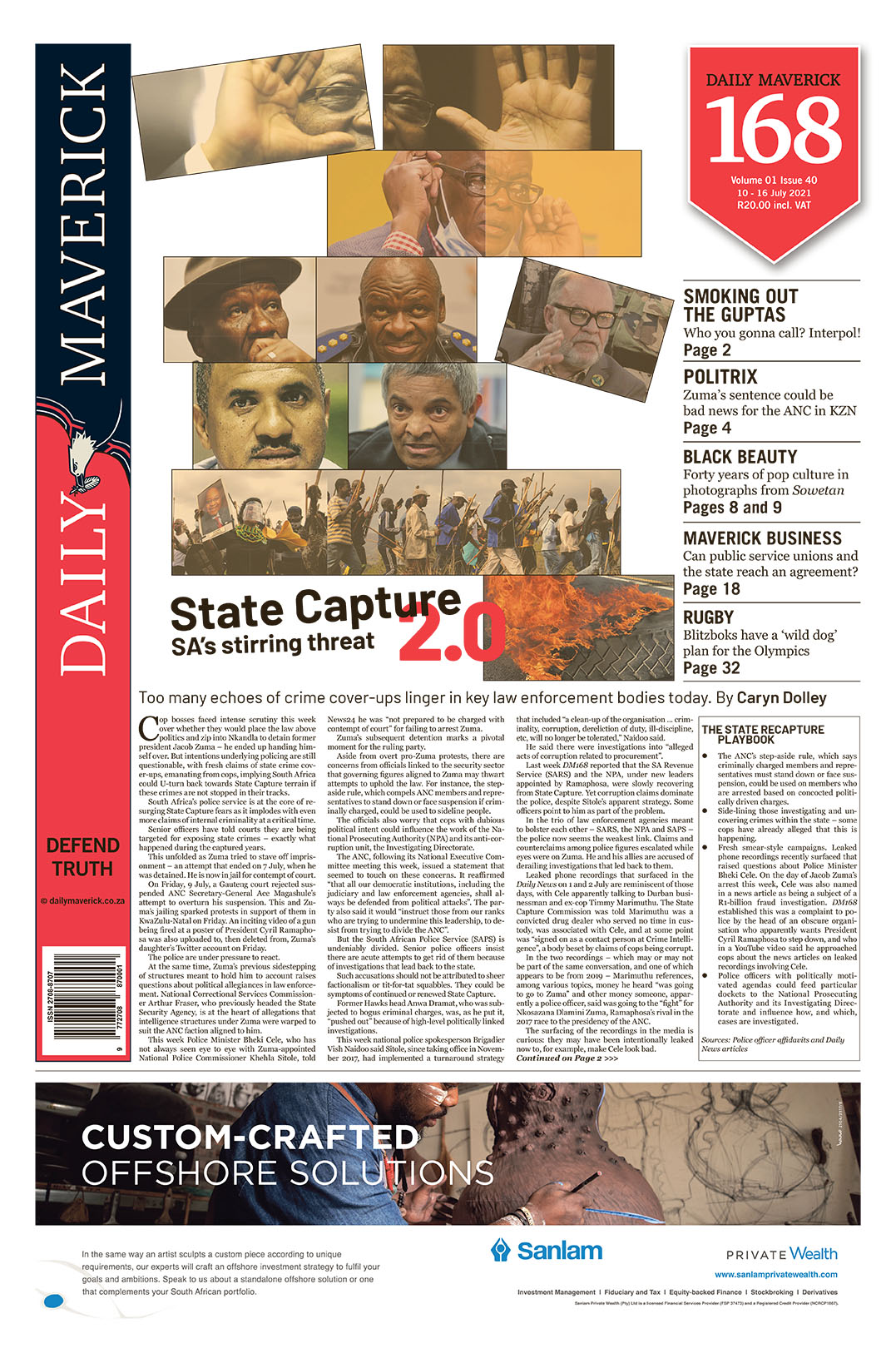
This story first appeared in our weekly Daily Maverick 168 newspaper which is available for free to Pick n Pay Smart Shoppers at these Pick n Pay stores.


No comments:
Post a Comment